
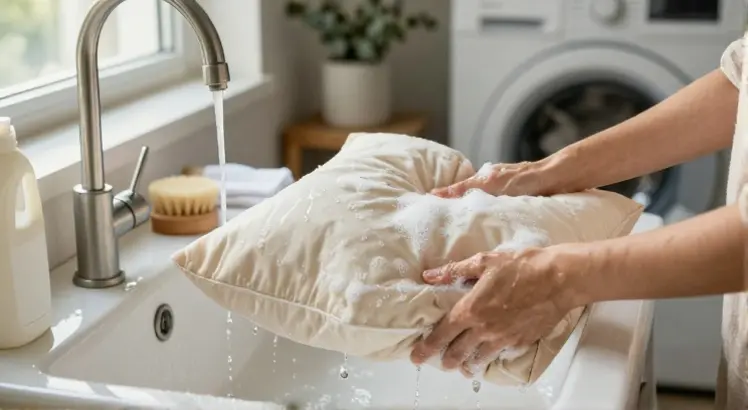
Bed rest pillows, often called reading pillows or husband pillows, are a comfort staple for anyone who enjoys sitting up in bed. They provide excellent back support for reading, watching TV, or working on a laptop. However, because they are used so frequently and often come into contact with skin, hair, and snacks, they can accumulate dust, sweat, and oils quickly.
Knowing how to wash a bed rest pillow properly is essential to maintain its shape, fluffiness, and hygiene. If you simply toss it into the washer without preparation, you risk clumping the filling or tearing the fabric. This guide will walk you through the safest methods, whether you are dealing with a memory foam blend or a classic polyester fiberfill.
We will cover hand washing, machine washing, and spot cleaning techniques. Plus, we will share drying secrets that help prevent that dreaded musty smell. Let’s get your favorite lounging companion fresh and clean again.
Understanding Your Bed Rest Pillow’s Materials
Before you introduce any water or detergent to the equation, you must identify what is inside your pillow. The cleaning method for a shredded memory foam bed rest pillow is dramatically different from a standard polyester-filled one. Ignoring this step often leads to irreversible damage, such as foam disintegration or lumpy filling.
Check the manufacturer’s care label attached to the seam. Look for symbols regarding water temperature and agitation. If the tag has been removed, carefully unzip the inner liner (if available) to visually inspect the filling.
Types of Fillings
- Shredded Memory Foam: This filling is extremely supportive but highly absorbent. It cannot withstand aggressive machine cycles. Water can become trapped inside the foam cells, leading to mold growth.
- Polyester Fiberfill: A common, budget-friendly material that mimics down. It is generally machine washable and dries quickly, though it can clump if the pillow casing is not durable.
- Microbeads: These are tiny polystyrene beads that provide a crunchy, molding feel. Washing these often requires sealing the core in a separate bag, or you might be dealing with a nightmarish static mess.
Removable Covers vs. Non-Removable Covers
The presence of a zippered, removable cover makes your life significantly easier. In most cases, you only need to wash the outer fabric and spot clean the inner core. If the outer fabric is permanently attached, you must be much more cautious about soaking the entire unit.
If your pillow has a removable cover, take it off and wash it separately according to the fabric type, usually cotton or plush velour. For the foam core inside, skip the machine and move directly to the hand-washing or spot-cleaning steps below. If you are unsure about the fabric’s durability, testing a hidden area with a mild soap is a smart precaution.
How to Wash a Bed Rest Pillow: Step-by-Step
Now that you have identified the materials, it is time to choose your battle plan. The two primary approaches are hand washing and machine washing. Always remember that gentle care preserves the life of your pillow much longer than aggressive scrubbing.
For similar support pillow types, you might want to read our detailed tutorial on washing a husband pillow safely. While bed rest pillows and husband pillows share many features, their armrest designs can sometimes require different handling.
Hand Washing Method
Hand washing is the safest choice for memory foam bed rest pillows or those with weak seams. It gives you absolute control over the amount of water and pressure applied to the filling. This method takes a bit more muscle, but it is the gold standard for longevity.
Start by filling a large bathtub or deep utility sink with lukewarm water. Avoid hot water, as it can warp the foam structure. Add a small amount of gentle, low-sudsing detergent specifically designed for delicates.
- Step 1: Submerge and Squeeze. Lower the pillow into the water and press down gently to fully saturate the core. Do not twist or wring the foam, as this can tear it. Simply squeeze it like a bellows to allow the soapy water to flow in and out.
- Step 2: Soak and Rinse. Let the pillow soak for 10 to 15 minutes to break down body oils. After soaking, drain the soapy water. Refill the tub with clean, cold water and continue squeezing the foam until no soap bubbles remain. This usually requires two or three rinse cycles.
Be patient with the rinsing stage. Residual soap is a magnet for dirt and can cause the foam to degrade over time. Once the water runs clear, press the pillow firmly against the bottom of the tub to expel as much water as possible before moving it.
Machine Washing Method
If your tag clearly states the pillow is machine washable, usually for polyester fiberfill, you can use a washing machine. However, you must still observe strict rules to protect the pillow’s architecture. Agitation is the enemy of structured backrests.
Before loading the machine, place the pillow inside a large mesh laundry bag. If the pillow is bulky, a clean white pillowcase with the open end tied securely works in a pinch. This prevents the straps or armrests from catching on the machine’s agitator.
- Set the Cycle: Select the delicate or gentle cycle with a cold water temperature. Cold water is effective for cleaning body soils without shrinking fabric covers.
- Detergent Dosage: Use minimal detergent, roughly half of what you would use for a regular load. High-efficiency machines are prone to leaving suds in thick pillows if over-soaped.
- Balance the Load: If you are washing a single pillow, it can throw the machine off balance during the spin cycle. Add two or three heavy towels to the drum to balance the weight distribution.
Once the cycle finishes, immediately remove the pillow. Do not let it sit wet in the drum, as this invites mildew. Run an extra spin and rinse cycle if the pillow still feels overly sudsy to the touch. The Spruce offers excellent guidelines on general pillow washing that reinforce these safety steps.
Spot Cleaning for Quick Refreshes
Maybe you do not need a deep clean, and you just spilled some morning coffee on the top corner. In this case, spot cleaning is your most efficient strategy. It keeps the foam dry and prevents the hours-long drying ordeal.
Mix a small bowl of warm water with a drop of mild dish soap. Dip a soft microfiber cloth into the solution, wringing it out until it is damp, not soaking. Blot the stained area repeatedly, transferring the stain from the pillow to the cloth.
Never rub the stain aggressively on a fabric cover, especially if it is velvet or plush, because this can mat the fibers and create a permanent bald spot. After the stain lifts, blot the area with a separate cloth dipped in plain clean water to rinse out the soap. Finally, press a dry towel onto the spot to absorb moisture and aim a fan at the area for quick drying.
Drying Your Bed Rest Pillow Without Damage
Drying is the stage where most cleaning attempts fail. A damp core is a breeding ground for bacteria and mold, which can ruin a pillow and pose a health risk. The correct drying method is entirely dependent on the filling material.
For polyester fiberfill pillows, you can use a dryer on the lowest heat setting. Toss in two or three wool dryer balls or clean tennis balls in socks. These bounce around the drum, breaking up clumps of wet fiber and restoring the pillow’s original fluffiness.
Check the pillow every 20 minutes if you use an auto-dry cycle. The exterior fabric may feel dry while the inner core remains wet, so squeezing firmly with your fingers is necessary to feel for internal dampness. This can take up to two hours or more, depending on the density.
Memory foam pillows, however, must never enter a hot dryer. High heat breaks down the viscoelastic structure, turning it brittle. Instead, lay the memory foam bed rest pillow flat on a drying rack in a well-ventilated area, preferably outside in the shade. Sunlight is a natural disinfectant, but direct, harsh UV rays can yellow the foam.
Turn the foam core over every few hours to ensure even drying. Placing a box fan directly in front of it will speed up air circulation and reduce drying time significantly. If you notice a lingering musty smell, a light misting of white vinegar spray before the final drying phase can help neutralize odors.
Maintenance Tips to Extend Its Life
Prevention is far less labor-intensive than a deep clean. The easiest way to keep a bed rest pillow fresh is to protect it before it gets dirty. A high-quality, machine-washable cover acts as a barrier against sweat and skin cells.
Consider using a water-resistant mattress protector designed for pillows under your decorative shams. Vacuuming the pillow surface every two weeks with a handheld upholstery attachment also removes dust mites and dead skin flakes that dull the fabric.
If you frequently use your bed rest pillow for eating snacks, invest in a second set of covers to swap out weekly. Fluffing the pillow daily by grabbing the side handles and shaking it redistributes the filling, preventing permanent lumps from forming in the high-pressure back area. For more insights on maintaining similar back support products, check out our comprehensive guide on cleaning your backrest pillow effectively.
Frequently Asked Questions
Can I put my bed rest pillow in the washing machine if it says spot clean only?
No. Ignoring “spot clean only” instructions usually destroys the internal foam. The fibers can break apart, causing the pillow to lose its structural integrity and become flat. Trust the manufacturer’s label, especially on high-density memory foam.
How often should I deep clean a bed rest pillow?
If you use the pillow daily for reading or sleeping upright, a deep clean every three to four months is a healthy schedule. If it is kept in a guest room or primarily used for decoration, once or twice a year is sufficient. Always follow up use with a quick vacuum to stretch the time between washes.
Why does my clean pillow smell sour after drying?
A sour smell indicates that the pillow took too long to dry, allowing mildew to set in. You can kill the bacteria by spraying the surface with undiluted white vinegar and letting it dry again in direct sunlight. If the smell persists, the spores have likely penetrated deep into the filling, meaning the pillow may need replacing.
Can I use bleach to whiten my bed rest pillow cover?
Bleach is too harsh for the synthetic fibers found on most backrest pillow shells. Instead, use an oxygen-based bleach alternative or a mixture of baking soda and hydrogen peroxide to brighten the fabric. Harsh chlorine can weaken the seams, causing them to rip when you lean against the pillow.
Conclusion
Taking the time to learn how to wash a bed rest pillow correctly pays off in both comfort and cleanliness. Always start by checking the material tag to decide between hand washing and machine washing. Never skip the crucial step of drying the core completely to avoid mold.
Remember that hand washing is your safest path for memory foam, while careful machine cycles work well for polyester fills. With regular fluffing and the use of protective covers, you can keep your backrest pillow looking and smelling new for years. Fresh laundry smells and a supportive, fluffy pillow truly make relaxing in bed that much better.