
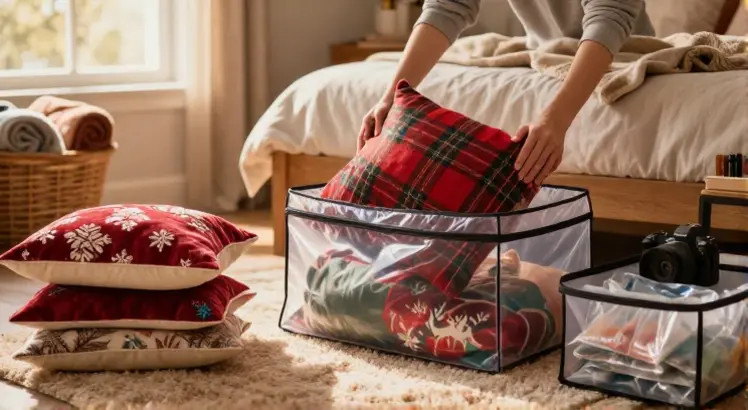
Decorating for the holidays brings warmth and cheer, but when the season ends, you face a common dilemma: what do you do with all those festive pillows? Knowing how to store holiday pillows correctly preserves their shape, fabric, and vibrant designs so they look just as beautiful next year. Tossing them into a dark corner of the basement might seem convenient, but it often leads to musty odors, crushed inserts, and irreversible fabric damage. With a few simple storage habits, you can protect your investment and make next year’s decorating a breeze.
In this guide, we will walk you through a complete system for storing holiday pillows, from pre-storage cleaning to choosing the best containers. You will learn which materials need extra care, how to save space without flattening fibers, and which common mistakes ruin seasonal pillows every single year. Whether you own a pair of velvet Santa pillows or a full set of Halloween-themed throws, these strategies will keep them fresh, clean, and ready for their next debut.
Why Proper Storage Matters for Holiday Pillows
Holiday pillows are often made with delicate embellishments, such as embroidery, sequins, appliqués, or specialty fabrics like velvet and faux fur. Unlike everyday pillows, they sit in storage for ten to eleven months at a time, leaving them vulnerable to dust, humidity, and pests. Improper storage can cause yellowing on light fabrics, creases that become permanent, and mildew growth that ruins the pillow completely.
A well-planned storage routine does more than preserve appearance. It helps you stay organized, saves you money by extending the lifespan of your decor, and makes decorating faster when the season rolls around again. When you invest in quality seasonal pillows, protecting that investment becomes a natural next step.
Step 1: Clean Before You Store
The most important rule when learning how to store holiday pillows is this: never pack away a pillow that is not completely clean. Body oils, holiday cookie crumbs, and invisible dust can attract fabric-eating insects and lead to stubborn stains that set in over time. Check the care label first. Most decorative pillows have a removable cover that you can machine wash or hand wash, while the insert might need gentle spot cleaning.
For delicate fabrics like velvet or silk, vacuum the surface using a handheld attachment with a low suction setting. This removes dust without crushing the fibers. If your holiday pillow has fur or faux fur accents, pay extra attention to those areas. A gentle brush can lift matted fur, and a mild fabric spray can neutralize odors without soaking the material. For a more thorough guide on handling these textures, read our step-by-step instructions on how to clean fur throw pillows.
After cleaning, let the pillows air-dry completely in a well-ventilated area, away from direct sunlight. Even a small amount of trapped moisture can cause mildew inside a sealed storage bin. If you are short on time, run a fan near the drying area to speed up evaporation. Never pack pillows while they are even slightly damp.
Step 2: Choose the Right Storage Containers
Plastic garbage bags are the enemy of any textile you want to preserve. They trap humidity and chemicals that can transfer unpleasant odors onto your pillows. Instead, invest in containers that strike a balance between protection and breathability. The following options work best for most household collections.
- Cotton or canvas storage bags: These allow air circulation while keeping dust away. They are ideal for pillows with foam or down inserts.
- Plastic bins with locking lids: Use only in climate-controlled spaces. Add a few silica gel packets inside to absorb excess moisture, and never place the bin directly on a concrete basement floor.
- Vacuum storage bags: Great for space-saving, but avoid using the highest compression setting on down or polyester-filled pillows. Over-compression can break down fibers and prevent the pillow from fluffing back up. Use vacuum bags mainly for synthetic flat inserts.
- Under-bed storage boxes: Shallow, clear containers work well for throw pillows because they prevent you from stacking heavy items on top, which causes crushing.
Label every container with the holiday and pillow type, not just a generic “holiday pillows” tag. This simple habit saves you from opening four bins to find your Thanksgiving pillows next November.
Step 3: Where to Store Your Holiday Pillows
Location matters as much as the container. Extreme temperature swings destroy textile fibers over time. Attics often become unbearably hot in summer, causing adhesives in embellishments to melt and elastic to degrade. Basements, unless fully finished and dehumidified, introduce moisture that leads to mildew.
The best storage spot is a cool, dry, and dark interior closet. Use a shelf in a guest bedroom closet or the upper section of a hallway linen closet. If you must use under-bed space, ensure the area has good airflow and is not pressed against a heating vent. For those who keep a large rotating collection of seasonal pillows, it makes sense to dedicate one closet shelf exclusively to out-of-rotation decor. Our article on organizing seasonal pillows all year long gives you a bigger picture strategy to rotate your decor without crowding essential storage.
Stand pillows upright on their sides rather than stacking them flat, if your container allows. This position minimizes pressure on the stuffing and helps maintain the pillow’s loft. If you must stack, place the heaviest pillows at the bottom and never exceed two layers.
How to Store Different Holiday Pillow Materials
Not all holiday pillows respond to storage the same way. A sequined Halloween pillow needs different protection than a cable-knit Christmas lumbar pillow. Understanding material-specific care prevents ugly surprises when you unbox them later.
Velvet and Chenille Pillows
Velvet crushes easily under weight. Wrap each pillow in acid-free tissue paper before placing it in a breathable cotton bag. Avoid vacuum sealing velvet, as the compression can create permanent crease marks that even steaming cannot remove.
Sequined and Beaded Pillows
These holiday showstoppers are delicate. Place a clean piece of muslin over the embellished side, then roll the pillow loosely instead of folding it. Store it in a single layer inside a sturdy box so the weight does not pull on the threads. Sharp edges from neighboring bins can snag sequins, so always leave a small buffer zone.
Faux Fur and Sherpa Pillows
Faux fur traps dust eagerly. After cleaning, brush the fur in its natural direction and stuff the pillowcase with clean, white tissue paper to hold its shape. A breathable cotton bag kept in a dark closet prevents yellowing while allowing the fibers to stay fluffy. For classic furry holiday pillows, the same rules apply as those outlined in our complete fur pillow washing and care guide, particularly the advice on drying thoroughly before storage.
Embroidered and Hand-Painted Pillows
These require museum-level gentleness. Wrap them in unbleached muslin, then store flat in a box with a lid. Add a lavender sachet to naturally repel moths without the harsh chemicals of mothballs, which can react with certain dyes.
Tips to Keep Holiday Pillows Fresh During Long Storage
Even with ideal containers and location, months of sitting can leave pillows smelling stale. A few proactive steps keep them factory-fresh. Place bamboo charcoal bags or silica gel packets inside your storage bins to control humidity and odor. Swap these out every six months if you store in an area with seasonal humidity shifts.
For natural freshness, tuck a small pouch of dried rosemary or cedar chips into the bin. These not only smell wonderful but also deter moths. Just make sure the pouch does not directly touch the fabric, as oils from certain botanicals can stain light-colored pillows. This approach aligns with the advice from Martha Stewart’s expert pillow storage advice, which highlights the importance of natural moisture absorbers and avoiding plastic bags.
When the next holiday season arrives, take the pillows out a week early. Allow them to air out in a sunny room for a few hours so any faint storage smell evaporates naturally. Fluff inserts by hand or toss them in the dryer on a no-heat air fluff cycle with a couple of clean tennis balls to restore loft.
Common Mistakes That Ruin Holiday Pillows
Many people make small errors that cost them their favorite holiday decor. Avoid these pitfalls to get the most life out of your pillows.
- Skipping the cleaning step. Even a pillow that looks clean can harbor skin oils that oxidize into yellow stains during storage.
- Using scented dryer sheets inside storage bins. The fragrance might seem pleasant, but the chemicals can react with certain dyes and cause discoloration over time.
- Storing in direct contact with raw wood shelves. Acids in unfinished wood can leach into fabric and leave brown marks. Always use a barrier, such as a cloth bin or acid-free paper.
- Overstuffing a bin. When pillows are crammed together, zippers, buttons, and sequins from one pillow can tear the fabric of another.
- Ignoring local climate. If you live in a humid region, do not rely on a cardboard box alone. A plastic bin with moisture absorbers becomes necessary.
Frequently Asked Questions About Storing Holiday Pillows
Can I store holiday pillows in vacuum bags?
Yes, but with caution. Vacuum bags are safe for pillows with synthetic, flat inserts, such as many printed decorative pillows. Avoid using them for down, feather, or structured foam pillows, because extreme compression damages the fill and permanently deforms the pillow. If you use a vacuum bag, do not suck out every last bit of air. Leave just enough volume that the pillow feels slightly cushioned.
How do I prevent moths from damaging my wool holiday pillows?
Clean the pillow thoroughly first, as moths are attracted to body oils and food residues. Store wool pillows in a breathable cotton bag and add a natural repellent like cedar blocks, lavender sachets, or dried eucalyptus. Check the pillows once during the off-season for any signs of webbing or larvae.
Should I remove pillow inserts before storing?
It depends on the pillow design. If the cover is removable and has delicate embellishments, take the insert out and store them separately. The insert can go in a vacuum bag, while the cover gets the tissue paper and box treatment. For non-removable pillows, clean and store the entire pillow as one unit.
What is the best way to re-fluff pillows after storage?
Most synthetic and down pillows respond well to a few minutes in the dryer on the air-only or low-heat setting. Add two clean tennis balls or dryer balls to help break up clumps. For foam pillows, press gently along the edges to redistribute the material, then let the pillow rest in a bright, airy room for a full day.
Conclusion
Knowing how to store holiday pillows correctly transforms a chore into a ritual of care. By cleaning each piece, selecting breathable and protective containers, and choosing the right storage location, you ensure your seasonal decor stays vibrant and ready for years of memory-making. The few extra minutes you spend folding a velvet pillow in tissue paper or placing a silica gel packet into a bin pay off when you unbox a perfectly fresh pillow next season.
Start with one small habit this week. Label your bins clearly, invest in a few cotton storage bags, and schedule a pre-storage cleaning day for all your holiday textiles. Your future self will thank you when the holidays roll around and every pillow on the couch looks, smells, and feels just as inviting as the day you bought it.
[TITLE]: How to Store Holiday Pillows: A Complete Guide [META]: Learn how to store holiday pillows properly to prevent damage, save space, and keep them fresh for next season. Tips on cleaning, containers, and more. [CONTENT]: All article content goes here