
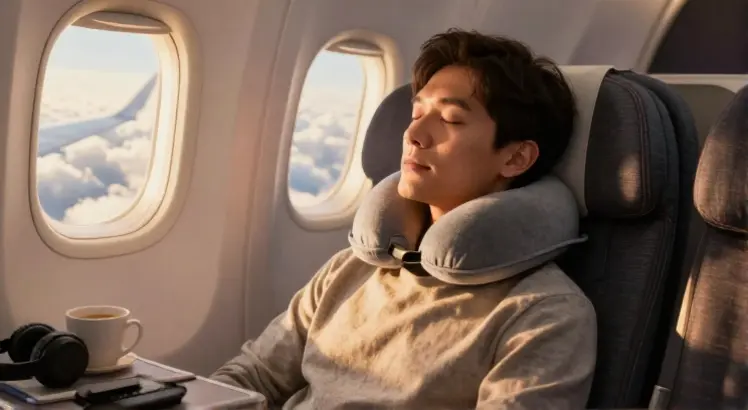
Learning how to use a travel pillow correctly is the first step to waking up from a flight or train ride without neck stiffness. Most travelers simply drape a U-shaped pillow around their neck and hope for the best. Unfortunately, that casual approach often leads to head bobbing, sore muscles, and zero rest. When you position the pillow the right way, it supports your cervical spine, keeps your airway open, and helps you drift off comfortably even in a cramped seat.
This guide breaks down exactly how to wear a travel pillow so it actually works. You will discover two distinct positioning methods, simple adjustment tricks, and common errors that can sabotage your comfort. By the end, you will know how to turn an ordinary neck pillow into a reliable sleep companion on any journey.
Understanding Travel Pillow Shapes
Before diving into technique, it helps to recognize the different shapes available. The classic U-shaped pillow surrounds the neck with foam or microbeads. Wrap-around designs have adjustable toggles or snaps to secure snugly. Some newer models feature a front panel that sits under the chin, while others rise high on the sides to prevent the head from tilting too far sideways.
Your pillow’s shape will influence which positioning method feels best. However, the core principles of neck support remain the same regardless of whether you use a basic inflatable pillow or a premium memory foam option. For more details on selecting a high-quality companion, check out our expert review of the best travel pillows for airplanes.
The Two Main Ways to Position a Travel Pillow
Many people are surprised to learn there are two completely different, yet effective, ways to wear a travel pillow correctly. The first is the classic behind-the-neck position. The second, less obvious approach is to place the bulk of the pillow under the chin. Both can work, but they serve slightly different purposes depending on how you intend to sleep.
Method 1: Behind the Neck (Classic U-Shape)
This is the setup most people picture. You rest the open part of the U around the back of your neck, letting the two arms drape over your shoulders toward the front of your chest. The thickest padding sits directly behind your neck, filling the gap between your head and the seat.
When done correctly, this position props your head against the headrest or the back of the seat. It limits how far your neck can extend backward and gently encourages a neutral spine. This works especially well if you are lucky enough to be in a seat that reclines slightly. To maximize comfort, pull the arms forward until the pillow puts light, even pressure on both sides of your neck without choking you.
The key mistake here is letting the pillow sit too low. You want the bottom edge of the pillow to tuck just above your shoulders, not rest on them like a scarf. With this behind-the-neck method, a properly adjusted pillow prevents your head from lolling to one side, which is a common trigger for waking up mid-nap with a sharp twinge. For a deeper look at the fundamentals of neck pillow positioning, read the proper technique for wearing a neck pillow.
Method 2: Under the Chin (Anti-Slouch)
The second method flips the script and is a game-changer for upright seats that barely recline. Here, you rotate the pillow so the thickest, curved part sits under your chin and the arms wrap behind your neck. This creates a soft shelf that catches your head when gravity pulls it forward as you doze off.
In an economy seat, the bobblehead effect is the number one cause of neck pain. Your head drops forward, straining the muscles at the back of your neck. Placing the pillow under your chin stops this forward slump before it starts. Your chin rests comfortably on the cushion, and your neck muscles can fully relax without holding up the weight of your head.
Many travel pillows now come with a snap or toggle specifically to secure this under-chin position. If yours does not, simply hold the arms against your neck and lean slightly into the pillow. This setup works beautifully for travelers who prefer sleeping upright or who find that pillows behind the neck push their head uncomfortably forward.
How to Adjust Your Travel Pillow for a Perfect Fit
No matter which method you choose, a sloppy fit will ruin any hope of deep rest. Follow these quick steps to dial in the fit every time you board a plane, train, or bus.
- Check the height: the pillow should bridge the space between your shoulder and your ear so your neck stays straight, not tilted.
- Adjust the toggles or drawstrings gradually. A pillow that is too tight can press on your throat and feel suffocating, while a loose one slides around uselessly.
- Inflatable pillows need a careful balance. Over-inflation creates a hard, bouncy ball that pushes your head away from the seat, but under-inflation gives no structure. Fill it until it feels firm yet slightly yielding, like a ripe peach.
- Test with your seat in its intended position. Recline your chair as far as it will go during boarding, then adjust the pillow so the contact points stay consistent whether you sit upright or lean back slightly.
Travel Pillow Mistakes to Avoid
Even seasoned travelers get this wrong. Avoiding these common errors will instantly improve your in-transit rest.
First, do not wear the pillow with the opening at the back of your neck. This is the single most widespread mistake. With the thick part in front and the gap behind, the pillow offers zero support for your head and you will wake up with your chin touching your chest. Always keep the bulk of the cushion where you need support, either behind the neck or under the chin.
Second, resist the urge to use a travel pillow that is too large for your frame. Petite travelers often drown in oversized U-shaped pillows that push their head forward instead of cradling it. Similarly, a child-sized pillow on a tall person will leave the neck completely unsupported. Your pillow should match your body size so that it fills the natural gap between your head and the seat without forcing any angle.
Finally, do not ignore headphone or earbud placement. Big over-ear headphones can clash with a travel pillow and break the seal around your neck. If you plan to listen to music or noise-canceling sounds, try in-ear monitors or look for pillows with headphone channels built into the side walls.
How to Use a Travel Pillow for Different Seating Scenarios
Not all seats are created equal, and your pillow technique should adapt to your location in the cabin.
Window Seat Strategy
A window seat gives you the luxury of leaning your head against the wall. Here, the behind-the-neck method really shines. Place the pillow at the back of your neck and rest your head sideways against the window. The pillow fills the gap at the neck while the wall supports the side of your head, creating a stable sleeping angle. You can even combine the pillow with a rolled-up jacket placed between your shoulder and the window for extra stability.
Aisle and Middle Seat Adjustments
Without a wall to lean on, middle and aisle seats demand the anti-slouch, under-chin method. Keep the pillow under your chin and let your head settle forward into its natural resting position. If you are in an aisle seat and worried about being bumped by the drink cart, try the behind-the-neck approach but turn your head slightly away from the aisle and tighten the pillow a bit more to hold that position. This gives your neck some lateral protection.
According to expert advice on travel pillow ergonomics, the goal is always to maintain a neutral spine. Whether you lean left, right, or forward, the pillow’s job is to fill the empty space so your muscles can switch off.
Choosing the Right Travel Pillow for Your Needs
Technique matters, but you also need a pillow that matches your sleeping style and travel habits. Memory foam models cradle the neck with gentle, even pressure and are great for long-haul flights. Microbead pillows are light and cool but may compact over time. Inflatable pillows offer the smallest pack size, yet they require the most finesse during inflation and positioning.
Side sleepers often benefit from taller pillows that fully support the neck when leaning to one side. Back sleepers need a flatter profile that does not push the head forward. If you frequently switch positions mid-flight, a wrap-around design with adjustable tightness gives you the flexibility to convert between chin support and behind-the-neck support without missing a beat.
Frequently Asked Questions
- Should I wear my travel pillow in the front or back? It depends on how you sleep. For leaning back against the seat, wear it behind your neck. To prevent your head from dropping forward, wear it under your chin with the thick part in front. There is no single correct orientation, only the one that stops your neck from bending uncomfortably.
- Why does my neck still hurt even when I use a travel pillow? Pain often signals that the pillow is either too big, pushing your head forward, or too small, leaving your neck unsupported. It could also mean you are wearing it backwards by placing the gap behind your neck. Try switching the orientation to see if the discomfort resolves.
- Can I use a travel pillow if I sleep on my stomach? Stomach sleeping on a plane is nearly impossible, but if you lean forward onto the tray table, place the pillow under your forehead instead of your chin. This keeps your spine from twisting while you rest your head face-down.
- How do I clean a travel pillow after a trip? Most have a removable, machine-washable cover. Spot-clean memory foam with a damp cloth and mild detergent, then let it air dry completely. Regular cleaning prevents breakouts and keeps the foam fresh for years.
Conclusion
Now that you know how to use a travel pillow correctly, your next trip can be genuinely restful. Start by identifying whether you lean back or slump forward when you doze. Then choose the behind-the-neck or under-chin method accordingly. Take sixty seconds during boarding to adjust the height, tighten the toggles, and test the fit with your seat reclined. That small investment of time pays off with a neck that feels loose and pain-free when you land.
Combine the right technique with a quality travel pillow that suits your body and sleeping habits, and you will transform cramped economy seats into a cocoon of comfort. For a detailed look at models that excel in real-world testing, revisit our expert review of the best travel pillows for airplanes. And if you want to refine your wearing style even further, the proper technique for wearing a neck pillow guide walks you through every adjustment in detail. Safe travels and happy napping.