
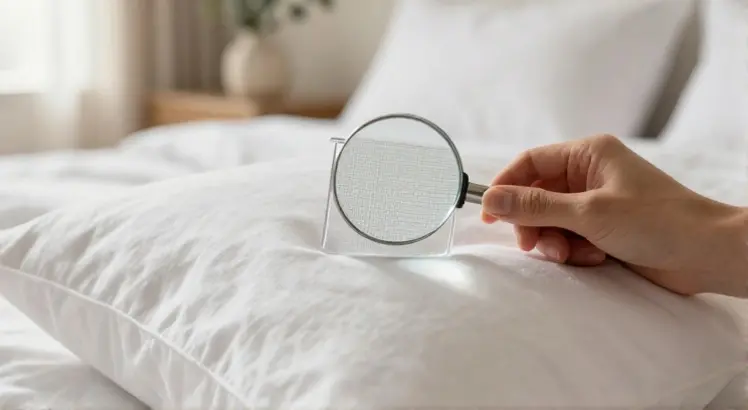
What is the thread count on my pillow sheets? That question pops into your head as you unbox a fresh set of pillowcases or notice your current ones feel a bit scratchy. Thread count is one of the most talked-about features in bedding, but many people misunderstand what it actually means. In this guide, you will learn exactly what thread count tells you about your pillowcases, how to check it, and what range delivers the best mix of softness, breathability, and durability.
Thread count refers to the number of horizontal and vertical threads woven into one square inch of fabric. It is a useful starting point for picking pillow sheets, but it is far from the only factor that matters. The type of cotton, the weave style, and the finishing process all play a bigger role in how your pillowcases feel against your skin at night.
What Exactly Is Thread Count?
Thread count is the sum of warp (vertical) and weft (horizontal) threads packed into a square inch of fabric. If a label says 300 thread count, that means roughly 150 vertical threads and 150 horizontal threads cross each other inside that tiny square. A higher number often indicates a tighter, smoother weave, but the relationship is not linear, and quality dips when manufacturers use creative math.
How Is Thread Count Calculated?
The standard method counts single threads. Some mills twist multiple fine yarns together to create a ply, and they sometimes count each ply as an individual thread. For example, a fabric made with two-ply yarn might be marketed as 600-thread-count even though the true single-thread count is 300. This is why it is important to look beyond the number and check the ply and yarn quality.
The Myth of the Super-High Thread Count
A common mistake is assuming a 1,000-thread-count pillowcase automatically feels like a cloud. In reality, most high counts above 500 are achieved by using multi-ply yarns or by squeezing in thinner, weaker threads. That can result in a heavy fabric that traps heat and pills quickly. True quality lies in the raw fiber, and many of the finest hotel pillowcases use single-ply cotton with a thread count between 200 and 400. You can read more about how sleep experts define thread count to see why the numbers game often misleads shoppers.
Why Thread Count Matters for Pillow Sheets
Your face spends seven to eight hours nestled against that fabric each night. Thread count influences three main things: softness, air flow, and how long the pillowcase holds up after repeated washes. Ignoring it completely can leave you with scratchy, sweaty, or quickly worn-out bedding.
Softness and Comfort
Generally, a higher thread count creates a smoother surface that glides over your skin. However, the softness you feel is also built by the type of cotton and the finishing process. Long-staple cotton fibers, like Egyptian or Supima, produce a silkier feel at a lower thread count than short-staple fibers that are packed tighter. A 250-thread-count pillowcase made from high-quality long-staple cotton will often feel softer than a 600-thread-count sheet made from coarse, short fibers.
Breathability and Temperature Regulation
Air needs tiny gaps between threads to escape. When thread count gets too high, the weave becomes so dense that airflow is restricted. This can make your pillow feel warm and clammy, especially if you are a hot sleeper. That is why many best-selling cooling pillowcases stick to the 200 to 400 range. If you are pairing your pillowcases with a chilly gel pillow or memory foam, the right fabric density matters even more. A helpful resource on keeping your pillow cool throughout the night explains how fabric choice works together with pillow technology.
Durability and Longevity
Pillowcases endure lots of friction, from tossing and turning to rubbing against facial hair and jewelry. A moderate thread count of 300 to 500, when made with quality single-ply yarns, tends to resist tearing and thinning better than ultra-high counts that rely on fragile, densely packed threads. You want a balance where the fabric feels substantial but not stiff.
How to Determine the Thread Count of Your Pillow Sheets
Your pillowcases may already be on your bed, and the packaging is long gone. You can still figure out the approximate thread count with a few simple methods. Here is how to become your own fabric detective.
Check the Label
Look for the tag sewn inside the pillowcase. Most manufacturers print the thread count directly on it, often near the fiber content and care instructions. If you see 300 TC or Thread Count: 400, that is your number. Remember that a missing thread count does not automatically mean low quality; some premium linen or silk pillowcases never list it because the metric is not relevant for those materials.
The Touch Test
Run your hand over the fabric. A lower thread count (under 200) tends to feel slightly rough or loosely woven, and you might even see tiny gaps when holding it up to light. A mid-range 300 to 500 feels smooth and crisp, while an overly dense sheet above 600 often feels heavy and almost synthetic. If you pick up a store sample, compare it against a known 300-thread-count pillowcase and notice the difference.
Understanding Fabric Weaves
Thread count tells part of the story, but the weave changes how that count feels. Percale is a simple one-over-one-under weave that creates a matte, crisp finish, often with a thread count between 200 and 300. Sateen uses a three-over-one weave, which exposes longer thread surfaces for a shiny, silky drape, usually landing in the 300 to 600 range. You can instantly tell your pillowcase’s weave by its sheen: if it is glossy and smooth, you likely have sateen.
What Is the Ideal Thread Count for Pillowcases?
The sweet spot depends on the material you prefer. Most sleepers find the best balance of softness, breathability, and toughness in the 200 to 400 range for cotton pillowcases. Here is a breakdown by fabric type so you can match the number to your sleep style.
Cotton Pillowcases: 200 to 400
For Egyptian cotton, Supima, or organic cotton, a thread count between 200 and 400 gives you a luxe feel without sacrificing ventilation. Hotel pillow sheets often sit around 300 thread count, which is crisp yet soft enough for sensitive skin. If you crave a slightly cozier hand-feel, 400 is still reliable, but going above 500 with cotton can lead to a heavy, heat-trapping case.
Percale vs. Sateen: Which Is Better?
Percale lovers enjoy a cool, lightweight crispness that feels fresh all night, look for 200 to 300 thread count. Sateen enthusiasts want drape and a subtle luster, and they should aim for 300 to 600. Both can be exceptional, but sateen tends to show wrinkles less, while percale breathes better. The right one is purely personal, but do not let a huge thread count on sateen fool you into thinking it is automatically superior.
Linen and Bamboo: Different Counts
Linen pillowcases rarely list a thread count because flax fibers are thick and measured by weight (GSM) instead. A quality linen pillowcase will feel textured and airy, perfect for hot sleepers. Bamboo rayon pillowcases often have a thread count in the 250 to 350 range, and they naturally wick moisture while feeling silky. In these categories, ignore the count and focus on the fabric’s origin and hand-feel.
Can You Have Too High a Thread Count?
Yes, absolutely. Once you push beyond 600 in cotton pillow sheets, you are likely dealing with multi-ply yarns or extremely thin threads that compromise durability. An 800-thread-count pillowcase can feel thick and stiff, pilling after a few washes and trapping body heat. Many honest textile manufacturers agree that counts over 500 add little value and are mostly a marketing tactic. Your priority should be long-staple cotton, single-ply construction, and a weave that suits your skin, not a four-digit number.
How Thread Count Affects Sleep Quality and Skin
Your pillowcase touches your face, scalp, and neck for hours. A weave that is too coarse can cause friction against your hair cuticles and skin, contributing to morning frizz and creases. On the flip side, a silky, well-constructed 300-thread-count sateen pillowcase can reduce tugging and help retain your skin’s natural moisture. For an even deeper dive into pillowcases designed for hair and skin health, you can explore dedicated options that go beyond thread count alone.
Hair and Skin Benefits
A decent thread count in a gentle weave creates less friction than a rough, low-count sheet. Many people notice fewer sleep lines on their cheeks and less tangled bedhead when they switch to a smooth, mid-range cotton or bamboo pillowcase. This small upgrade can make your morning routine much easier.
Practical Tips for Choosing Pillow Sheets
- Look for long-staple cotton varieties like Egyptian or Supima, which feel softer at lower thread counts.
- Check for single-ply on the label. It indicates honest thread count rather than inflated numbers.
- Hold the fabric up to light. A tight but breathable weave should let a small amount of light pass through.
- Wash new pillowcases before judging them. Finishing agents can mask the true feel, and a couple of washes reveal the real softness.
- Match the weave to your sleep style. Hot sleepers do best with percale or linen, while those who love a silky feel lean toward sateen or bamboo.
Frequently Asked Questions
What does thread count actually measure on pillow sheets?
It measures the total number of vertical and horizontal threads woven into one square inch of fabric. It gives a rough idea of density but does not guarantee quality alone.
Is 200 thread count too low for pillowcases?
Not at all. A well-made 200-thread-count percale pillowcase can feel crisply cool and soft, especially if it uses long-staple cotton. Many luxury hotels use this exact range because it breathes beautifully.
Why do some pillowcases feel rough even with a high thread count?
The roughness often comes from low-quality, short-staple cotton or heavy chemical finishes. High thread counts using multi-ply yarns can also create a cardboard-like stiffness that softness claims cannot fix.
How do I find the thread count if the tag is missing?
You can do a touch-and-light test. If you suspect a missing tag, compare the feel and breathability against a known thread count pillowcase, or contact the brand with the product name.
Does higher thread count mean the pillowcase lasts longer?
Not necessarily. Moderate thread counts with strong single-ply yarns often outlast super-high counts built with weak, thin threads. Proper care and gentle washing make a bigger difference.
Conclusion
Understanding what the thread count on your pillow sheets really means helps you cut through marketing noise and choose cases that support better sleep. Aim for the sweet spot of 200 to 400 for cotton pillowcases, prioritize long-staple fibers, and let your own comfort test be the final judge. The number on the label is merely a starting point, your skin, your scalp, and your nightly rest will tell you the full story. Next time you shop for new pillowcases, look past the big count and focus on the weave, fiber quality, and breathability that make your pillow feel just right.