
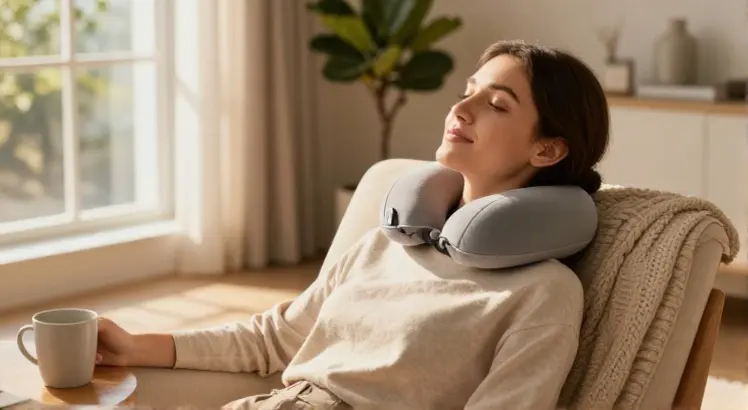
Mastering how to wear a neck pillow correctly can turn a restless flight or a quick nap into genuine relief. Many travelers stuff the U-shaped cushion behind their head only to wake up with a stiff neck. The secret lies in alignment, not just padding. At Pro Pillows Review, we have tested dozens of travel pillows to bring you this expert guide.
Understanding the right orientation instantly increases comfort and support. This article walks you through every detail, from the recommended position to small adjustments that make a huge difference. You will learn how to avoid common mistakes and get the rest you deserve.
Why Proper Neck Pillow Placement Matters
Wearing a neck pillow incorrectly often defeats its purpose. If the pillow pushes your head forward, it strains your cervical spine. Correct positioning maintains a neutral alignment, which reduces muscle tension and prevents that nagging ache after a long trip. The goal is to fill the space between your shoulder and your jaw without tilting your head.
Neck pillows are not just for airplanes. You can use them on buses, trains, or even while sitting upright in a chair at home. According to sleep experts at Sleep Foundation, a well-fitted travel pillow can promote better rest by limiting awkward head movements. When you place the pillow correctly, your neck muscles can finally relax.
The Role of Cervical Alignment
Your neck houses the upper part of your spine, and keeping it straight is essential. A poorly worn neck pillow tilts your chin toward your chest or lets your head fall sideways. Both positions squash the discs in your vertebrae. By learning how to wear a neck pillow the right way, you protect your spine during long hours of stillness.
Think of the pillow as a soft brace. It should cradle your neck just enough to prevent a sudden drop when you doze off. A subtle forward curve is fine, but the pillow must never force your head into an extreme angle. Checking this alignment takes only a second and pays off with hours of comfortable sleep.
Signs You Are Wearing It Wrong
You will know something is off if you feel pressure on your throat or your ears start folding over. Another red flag is waking up with a sore jaw or a headache at the base of your skull. If the pillow rides up and touches your hatline, it is too high. Discomfort in the temple area usually means the arms of the pillow are squeezing your neck instead of supporting it.
Pay attention to your shoulders as well. When the pillow sits too high, your shoulders hunch up involuntarily. That tension spreads into your upper back. A quick wiggle and reposition can fix most of these issues on the spot.
The Correct Way to Wear a U-Shaped Neck Pillow
Most neck pillows on the market today have a classic U shape. The opening of the U faces forward, and the curved base goes behind your neck. This sounds simple, yet subtle differences in orientation change everything. Our testing shows that a slight rotation brings the best results.
Start by placing the thickest part at the back of your neck, right below the hairline. The two arms should wrap around to the sides, resting gently under your jawbone. Avoid letting the arms climb too high toward your ears. If your pillow has a snap closure or an adjustable toggle, secure it snugly, but not tight enough to restrict swallowing. If you need a deeper walkthrough, see our full guide on the proper way to wear a neck pillow.
Wearing the Opening at the Back
Flipping the pillow so the opening sits behind your head is a game changer for many people. This position allows your chin to drop naturally when you relax, but it prevents your head from rolling to the side. It also keeps the front of your neck free, which feels cooler and less claustrophobic.
To try it, spin the pillow 180 degrees. The bulk of the cushion now covers the back of your skull, and the two arms extend forward along your jawline. You might need to adjust the height of your seat back. This technique works especially well in high-backed chairs or airplane seats with limited recline.
The Side-Sleeper Variation on a Plane
If you naturally lean toward the window, you can adapt the neck pillow to support a side tilt. Rotate the pillow slightly so one arm thickens the support under your cheek while the other arm rests against your chest or shoulder. Some travelers even shift the thicker loop completely to the side they favor. This turns the pillow into a cozy side bumper.
For a more comprehensive breakdown of airplane-specific techniques, you can explore our detailed instructions on using a travel pillow correctly. It covers everything from microbead adjustments to memory foam shaping.
How to Wear Neck Pillows for Different Activities
A neck pillow is not a one‑pose accessory. The way you wear it changes depending on whether you are in an airplane seat, on a train, or resting upright at home. Learning these variations maximizes the usefulness of a single product.
Wearing a Neck Pillow on an Airplane
Airplane seats leave little room to lean back, so the pillow must work with a slight recline. Keep the thick portion behind your neck and tighten any strap just enough to stop the pillow from sliding down your chest. If your seat has an adjustable headrest, raise it to meet the top of the pillow. This combo locks your head in place without straining your neck.
Window seats give you a natural wall. Lean into the pillow while pressing the side of your head against the cabin wall. The pillow provides the cushion, and the wall offers stability. Aisle seats require a bit more posture awareness. Try crossing your arms and resting them on the tray table to keep your shoulders square.
Using a Neck Pillow at Home or in the Office
Long hours at a desk can lead to forward head posture. Wearing a neck pillow backwards, with the opening at the back, gently pushes your head into alignment. This reminds your muscles not to jut forward. Use it for 15‑minute relaxation breaks. Do not sleep with it for hours in an upright chair unless you recline slightly.
At home, combine the pillow with a supportive recliner. Tilt the chair back a few degrees and place the pillow as you would on a plane. This setup works beautifully for reading or watching television without straining your neck. The key is to avoid letting your head hang forward.
Common Mistakes That Cause Neck Pain
Even the best pillow fails if you misuse it. Most mistakes come from prioritizing a soft feel over structural support. Here are the errors we see most often and how to fix them quickly.
- Placing the pillow under your chin. This hyperextends the neck backward and compresses the upper spine. Always keep the bulk behind your neck or at the sides.
- Over‑inflating inflatable pillows. A rock‑hard pillow feels terrible and creates pressure points. Inflate it only to about 70 percent so it can contour.
- Ignoring shoulder height. If your shoulders are broad, a thin pillow will not bridge the gap. Add a rolled scarf or a jacket under the pillow arm for extra lift.
- Wearing it too loose. A floppy pillow offers zero support. Snug it up so that it stays put when you nod off.
- Forgetting to adjust after reclining. When you tilt your seat back, the angle changes. Readjust the pillow so it still supports the natural curve of your neck.
Tips to Maximize Comfort and Support
Small tweaks can turn an okay experience into a great one. Use these practical tips the next time you grab your neck pillow. You will notice the difference within minutes.
- Wear it over a light scarf or hoodie collar. This reduces friction and keeps the pillow from rubbing against your skin. It also wicks moisture on warm flights.
- Pair the pillow with an eye mask and earplugs. Blocking light and sound helps you relax faster. Your body then naturally settles into the support.
- Use the seat belt sign moments to adjust. Before the plane takes off, get your pillow seated perfectly. Small corrections later fix emerging discomfort.
- Try a hybrid approach with a jacket. Thread a soft jacket through the pillow opening and bunch it up behind your lower back. This aligns your entire spine.
- Rotate the pillow periodically. On long trips, change the pillow’s position every hour to distribute pressure. Even a minor shift refreshes the feeling.
How to Wear a Neck Pillow for Maximum Airflow
Overheating is a common complaint with memory foam pillows. The denser the material, the more heat it traps. You can improve airflow by keeping the opening of the U around your throat area, not against it. A little gap allows cool air to circulate behind your neck.
Some pillows come with a perforated foam core or a cooling cover. If yours does not, you can simply place a thin cotton cloth between your skin and the pillow. This barrier wicks sweat and stops that sticky feeling. Avoid pulling the pillow arms so tight that they seal off ventilation.
Adjusting the Strap for Better Ventilation
If your neck pillow has an adjustable strap, leave a finger’s width of slack. The slight looseness promotes air circulation while still preventing your head from lolling forward. You want the pillow to touch your neck, not squash it. A delicate balance gives you the best of both worlds, stable support and a cooler experience.
In hot climates, consider a pillow filled with microbeads or shredded foam. These materials leave more space between particles. Air flows through easily. You can also store your pillow in a cool place until you board, then enjoy the initial chill as it warms to your body.
FAQ About Wearing a Neck Pillow
Which way does a neck pillow go?
The classic U-shaped pillow goes with the open part facing forward and the thick curve behind your neck. Many users find greater comfort by rotating it 180 degrees so the opening sits at the back. Both orientations work, test which one stops your head from dropping.
Should the neck pillow be thick at the back or sides?
A well-balanced pillow offers a slightly thicker back to fill the natural curve of your neck. The sides should be plush enough to support your jaw without pushing your head upward. If you lean sideways often, choose a pillow with consistent thickness all around.
Can you wear a neck pillow backwards?
Yes, wearing a neck pillow backwards is a popular hack for people who find the front opening uncomfortable. This method keeps your chin free and supports the back of your head. It also prevents the pillow from riding up against your throat.
How tight should a neck pillow be?
Snug enough to stay in place when you relax, but loose enough to allow a deep swallow. You should be able to slide two fingers between the pillow and your neck. A strap that is too tight can restrict blood flow and cause discomfort.
Is it okay to sleep with a neck pillow every night?
Neck pillows are designed for upright or semi‑reclined positions, not for horizontal bed sleeping. Using one nightly can alter your spine alignment and lead to stiffness. Reserve it for travel or short naps in a chair, and choose a proper bed pillow for nightly rest.
Conclusion
Knowing how to wear a neck pillow correctly transforms it from a mere travel accessory into a tool for genuine relief. Start by placing the thickest curve behind your neck, keep the arms snug but not tight, and experiment with the backwards orientation if you need more chin freedom. Adjust based on your seat angle and your natural sleeping posture.
The small details, like leaving a gap for airflow or adding a scarf for comfort, often spell the difference between waking up refreshed and dealing with a stiff neck. Use the techniques in this guide next time you travel. With practice, you will find your perfect fit in seconds. At Pro Pillows Review, we believe that smart, small adjustments lead to big improvements in rest and recovery.