
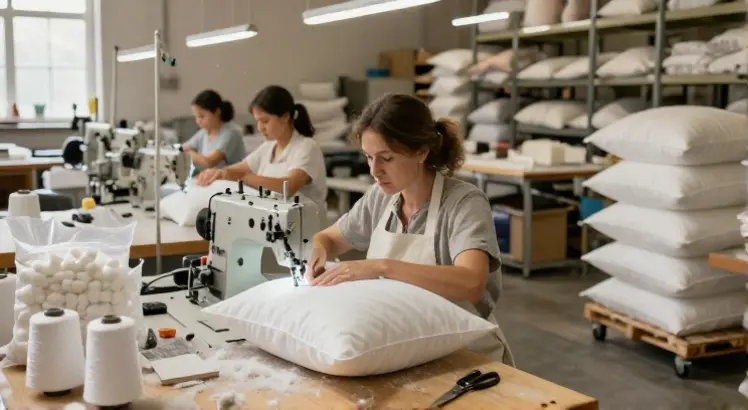
Have you ever flipped over your pillow and glanced at the tiny tag, wondering exactly where it was stitched together? If you have asked yourself, where are pillows manufactured, you are not alone. The journey of a pillow from raw material to your bedroom spans continents and involves a fascinating global supply chain. This guide will walk you through the major manufacturing hubs, the materials that dictate factory locations, and how to trace the origin of your own pillow.
Understanding where pillows are made helps you make smarter buying decisions. It connects you to the quality, ethics, and durability of the product you rest your head on every night. By the end of this article, you will know exactly which countries dominate pillow production and why it matters for your sleep health.
The Global Landscape of Pillow Manufacturing
Pillow manufacturing is a massive, decentralized industry. No single country holds a monopoly, but a handful of regions have emerged as dominant players due to access to raw materials, labor costs, and specialized machinery. The global pillow market is expected to surpass $18 billion in the next few years, with production split primarily between Asia, North America, and parts of Europe.
The location of a factory often depends on the type of pillow being made. A memory foam pillow’s birth is very different from that of a luxury goose down pillow. To truly grasp the answer to where are pillows manufactured, you must look at the material story first. For a detailed look at production centers, check out our article on pillow production hubs around the world.
China: The World’s Leading Pillow Producer
China is the undisputed heavyweight champion of pillow manufacturing. Estimates suggest that over 60% of all bedding products sold globally have some connection to Chinese factories. The country’s strength lies in its vertically integrated supply chain, which allows raw material processing, fabric weaving, and final assembly to happen within a single industrial cluster.
Cities like Nantong and Hangzhou house massive textile industrial parks dedicated to home linens. These facilities produce everything from budget-friendly polyester pillows sold in big-box stores to high-density memory foam models. Low labor costs and advanced automation have made China the default choice for many American and European brands looking to keep prices competitive.
However, not all Chinese manufacturing is equal. Factories range from state-of-the-art, ethically audited facilities to smaller workshops with less oversight. If your pillow tag says Made in China, it likely offers a good value, but checking for third-party certifications like OEKO-TEX helps ensure safety.
The United States: Craftsmanship and Speed
The United States remains a critical player in pillow production, especially for premium and made-to-order segments. While the volume of US-made pillows is smaller than China’s, the value is often much higher. American factories excel at producing luxury down pillows, organic latex pillows, and custom foam solutions that require tight quality control.
Many direct-to-consumer mattress brands assemble their pillows in the US to maintain a Made in America appeal. States like North Carolina, Georgia, and California have a long history of textile manufacturing. For a deeper dive into materials that often come from these factories, you can explore the best pillow fillings for comfort.
Domestic manufacturing allows for faster shipping times and stricter adherence to fire safety regulations like CFR 1632. It also appeals to consumers who want to support local economies and reduce the carbon footprint associated with transoceanic freight. The existence of US factories proves that not everything in bedding is outsourced.
India and Pakistan: Cotton Powerhouses
When it comes to natural fiber pillows, India and Pakistan are major players. These countries are among the largest growers of cotton, giving them a natural advantage in producing cotton-filled pillows, covers, and down-alternative blends. The region’s textile industry is deeply rooted, with generations of expertise in spinning and weaving.
You will often find that high-quality organic cotton pillows are sourced from farms and factories in the Indus Valley region. The labor costs here are lower than in the West, but the skill level is remarkably high. Many European luxury brands source their high thread-count cotton sateen pillow covers from mills in Pakistan.
In recent years, both India and Pakistan have faced pressure to improve labor standards. Responsible brands are now partnering with Fair Trade certified factories here to produce ethical bedding. If you see a label reading Fair Trade Cotton, there is a good chance the pillow’s journey began in South Asia.
Europe: Luxury and Synthetic Innovation
Europe cannot compete with Asia on volume, but it dominates the luxury niche. Countries like Germany, Poland, and Italy manufacture some of the finest pillows in the world. German engineering is particularly renowned for precision-cut latex pillows and advanced ergonomic designs.
Poland has emerged as a leading supplier of premium goose down pillows. The region’s climate and agricultural practices produce down with high fill power that is exceptionally soft and long-lasting. If you buy a genuine European down pillow, the raw filling likely came from farms in Eastern Europe and was cleaned and sorted in Poland or Hungary.
Italy, famous for its fashion, applies the same flair to textile design on pillow covers. European manufacturing adheres to strict chemical regulations like REACH, which guarantees a cleaner end product. While the price tag is higher, the longevity and purity levels are often unmatched.
How Materials Influence Manufacturing Locations
The phrase where are pillows manufactured cannot be fully answered without referencing raw materials. Geographically, factories cluster around the source of the bulk material to reduce logistics costs. Heavy or bulky raw materials like foam and feathers are expensive to ship globally before they are turned into a finished product.
Down and Feather Pillows
Down and feather pillows are primarily manufactured close to the poultry industry. China is the largest processor of duck and goose down in the world, accounting for the vast majority of global supply. The feathers are a byproduct of the meat industry, which is massive in Asia.
Eastern Europe, particularly Hungary and Poland, produces high-fill-power goose down. The cold climate results in larger, more insulating clusters. If you want a truly traceable down pillow, look for the Responsible Down Standard (RDS) label. This ensures ethical sourcing, often from European farms with strict animal welfare rules.
Memory Foam and Polyester
Synthetic pillows rely heavily on petrochemicals. Polyester fiberfill and solid memory foam polyurethane are derived from oil. It is no surprise, then, that manufacturing hubs align with major petrochemical processing zones. The Gulf Coast of the US and industrial cities in China are prime locations.
China’s mastery of polyurethane chemistry allows it to produce memory foam pillows at an incredibly low cost. US manufacturers, however, often pour proprietary foams with unique cooling gels or graphite infusions. For a technical breakdown of foam types, the Sleep Foundation’s pillow buying guide offers excellent clarity.
Polyester pillows are almost universally made in Asia. The process is highly mechanized, with siliconized fibers blown into shells to create a down-like feel. These are the most affordable pillows on the market, and their production is concentrated in Chinese and Indian mega-factories.
Organic and Latex Pillows
Natural latex pillows are a world apart. Rubber trees, the source of latex sap, thrive in tropical climates. Thailand, Sri Lanka, and Vietnam are the primary sources for organic latex foam. Manufacturing happens locally because the fresh sap must be processed quickly before it spoils.
These regions have invested in Dunlop and Talalay processing plants right next to the plantations. A genuine organic latex pillow is likely handmade or molded in these Southeast Asian countries. The final assembly, however, might be finished in the US or Europe if a cotton cover is added later.
The Journey from Factory to Your Bedroom
It is easy to forget the complex logistics behind a simple pillow. Once the materials are gathered and the pillow is sewn, it often embarks on a long maritime voyage. A container ship from Shanghai to Los Angeles takes about two to three weeks. That is just the start.
Quality Control and Certifications
Before a pillow leaves the factory, it should pass a series of quality checks. These tests check for proper seam strength, chemical residue, and fill weight. Reputable factories employ a golden sample approval process where a perfect prototype is kept for comparison against bulk production runs.
Third-party certifications add a layer of trust. Look for OEKO-TEX Standard 100 to guarantee no harmful chemicals, or CertiPUR-US for memory foam pillows. These certifications are independent and verify that a pillow made in a high-volume factory still meets strict health criteria.
Ethical Manufacturing and Fair Trade
Transparency in manufacturing is becoming a key differentiator for modern brands. Customers rightly want to know if the people who made their pillow were paid fairly and worked in safe conditions. This is where social compliance audits like SMETA or BSCI come into play.
While China and India produce the majority of pillows, not all factories uphold the same standards. Brands that are transparent about their supply chain usually have a strict vendor code of conduct. If ethical manufacturing matters to you, supporting those brands pushes the industry toward better practices globally.
How to Identify Where Your Pillow Was Made
Finding the origin of your pillow is usually straightforward, but marketers can make it muddy. The key is knowing how to read the mandatory labels and understanding some common loopholes in labeling laws.
Reading Labels and Law Tags
In the United States, law requires that pillows have a tag stating the country of origin, the filling material content, and the manufacturer or distributor. The tag is usually stitched into the seam. Made in China is the most frequent phrase, but you might see Shell made in China, filled and finished in the USA, which speaks to a hybrid supply chain.
Do not confuse the distributor address with the manufacturing location. A company based in New York might sell pillows made entirely in India. The Made in label is your definitive source. If a brand avoids putting this on the main tag, it is a red flag.
Brand Transparency
Some brands, particularly direct-to-consumer startups, publish full factory lists on their websites. This is the gold standard. It allows you to search the facility and see its compliance history. Others use vague language like globally sourced materials.
If you cannot find clear country of origin information on a product page, email the company before buying. A trustworthy brand will answer honestly. The more we demand transparency, the more normalized it becomes in the textile industry, and the easier it is to know exactly where our pillows are manufactured.
Frequently Asked Questions
Are most pillows made in China?
Yes, the majority of mass-market pillows sold in North America and Europe are manufactured in China. The country has large-scale textile industrial clusters that handle everything from polyester filling to finished sewing. Even luxury brands often source raw materials from China, though they may finish the final assembly elsewhere to claim a different origin.
Is a pillow made in the USA better quality?
Not automatically, but USA-made pillows often meet tighter regulatory standards and use higher-grade domestic foams or down. American factories generally produce smaller batches, enabling stricter quality control. However, there are also low-quality US assemblers who import cheap shells, so brand reputation remains more important than origin alone.
What does assembled in the USA mean for pillows?
Assembled in the USA usually implies that the outer shell and the filling were imported from overseas, often China or India, but the final sewing and stuffing occurred in an American facility. This allows brands to claim partial domestic production. It is a hybrid model that supports US workers, but the core components are globally sourced.
Where are organic pillows typically manufactured?
Organic pillows, especially latex ones, are heavily manufactured in Southeast Asia near rubber plantations, particularly Sri Lanka and Thailand. Organic cotton pillows often originate in India and Turkey, where the organic textile industry is well established. The final organic certification usually covers the entire chain, from farming to the sewing floor.
Conclusion
The question of where pillows are manufactured opens a window into a vast, globalized industry. From the high-tech foam labs in the United States to the sprawling textile cities of China and the organic rubber plantations of Sri Lanka, every pillow carries a travel story. Knowing this geography helps you shop smarter, prioritizing quality, ethics, or sustainability based on your values.
Next time you fluff your pillow, check the law tag. Recognize that Made in China often means high efficiency, while Made in the USA might signal premium foam, and Made in India likely connects you to heritage cotton craftsmanship. Where you rest your head is a small, everyday choice that echoes around the world.