
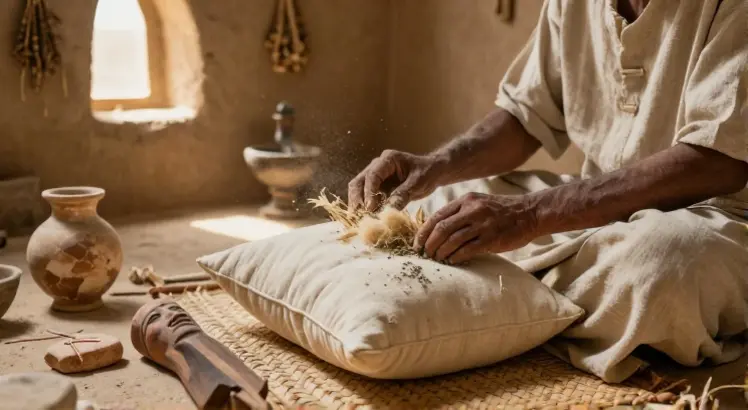
When you rest your head on a soft pillow at night, you are participating in a ritual that dates back thousands of years. The quest for comfort during sleep is not a modern luxury, it is a deeply rooted human need. Understanding when was the first pillow invented takes us on a journey far beyond fluffy down and memory foam, straight into the stone homes of ancient Mesopotamia.
Archaeological evidence pushes the origin of the headrest, the earliest form of a pillow, back to around 7,000 BCE. These ancient objects were not the plush cushions we know today. They were rigid structures carved from stone, designed primarily to protect the elaborate hairstyles of the wealthy, rather than to provide spinal comfort.
The Mesopotamian Genesis: The First True Headrests
The definitive answer to when was the first pillow invented points toward the fertile plains of ancient Mesopotamia. Here, in the cradle of civilization, the privileged classes began using curved stone blocks to cradle their necks. These early Mesopotamian pillows date back to the earliest dynastic periods, and their purpose was strictly functional within the social hierarchy.
Sleeping with your head on a stone crescent kept insects and vermin from crawling into ears, noses, and mouths. Additionally, the headrest elevated the head above the ground, allowing cool air to circulate in the hot climate. For a more detailed look at the cultural pressures that shaped these designs, you can explore the fascinating reasons pillows were created.
Ancient Egypt: Soft Materials Emerge
While Mesopotamia pioneered the rigid headrest, ancient Egypt transformed it into a spiritual object. Egyptian headrests, often made of wood, ivory, or alabaster, were intricately carved with images of gods and protective spells. These pillows were placed in tombs to guard the deceased’s head, considered the seat of life, on their journey to the afterlife.
The Egyptian approach was not purely practical, it was deeply symbolic. The headrest physically and metaphorically raised the sleeper toward the heavens, fighting off chaotic demons of the night. Though still hard, these artifacts mark a shift toward the pillow as a spiritual tool rather than a mere comfort item.
The Shift from Stone to Wood
The transition from unshaped stone to carved wood represented a technological leap. Wood was lighter, easier to shape, and could be transported, but it remained a luxury. Egyptians perfected the curved cradle design, a shape that would later inspire modern ergonomic pillows. Interestingly, these wooden supports sometimes had a layer of linen wrapped around them for a small touch of softness.
The use of softer, organic materials began to appear alongside these rigid forms. Some Egyptian artifacts show traces of bundled reeds or folded cloth placed on top of hard surfaces. This hybrid method hinted at the human craving for softness, a craving that would explode centuries later in China.
The Chinese Innovation: Hard Pillows for Health
In stark contrast to the plush pillows we crave today, ancient China embraced the hard pillow. Made from porcelain, ceramic, jade, and bamboo, these pillows were believed to channel energy and promote health. Chinese medicine taught that soft pillows stole the body’s vital qi and weakened the circulatory system.
Porcelain pillows, often beautiful works of art, were cool to the touch and kept the head elevated. Farmers and lower classes used wooden or bamboo versions. This tradition persisted for centuries, and surprisingly, rigid pillows are still used in some traditional practices today, valued for their supposed ability to improve brain function and hair growth.
Jade and the Pursuit of Immortality
For the imperial elite, jade pillows were the ultimate luxury. The stone was thought to preserve the body and ward off decay. Sleeping on jade was less about spinal alignment and more about absorbing the mineral’s mystical properties. These pillows were incredibly heavy and cold, yet they were prized possessions buried with their owners for the afterlife.
This Eastern philosophy highlights a major split in pillow evolution. The West slowly moved toward softness, while the East, for a long time, remained committed to hard, medicinal rest. You can trace the entire evolution through different civilizations in this detailed timeline of pillow history.
Greece and Rome: The Birth of Soft Luxury
The Greeks and Romans are responsible for introducing the soft pillow to the Western world. Rejecting the harsh materials of their ancestors, they stuffed fabric sacks with straw, reeds, and feathers. By the time of the Roman Empire, the down pillow had become a status symbol, often fought over in wills due to its immense value.
Roman pillows were not just for the bedroom. They were used on dining couches during lavish banquets. The elite would recline on large, soft cushions while eating, a practice that horrified early Christian puritans who saw it as an invitation to moral decay and gluttony.
Feathers, Straw, and the First Fill Materials
The Romans experimented extensively with fill materials. Goose down became the gold standard because of its light weight and insulating properties. For the less wealthy, a bag stuffed with plain straw was the alternative. These early down pillows required constant plumping, a small price to pay for a taste of comfort previously unknown to mankind.
As the Roman Empire expanded, so did the use of the soft pillow. However, this comfortable trend vanished in many parts of Europe with the fall of Rome. The Middle Ages pushed comfort aside, and the pillow became a forgotten luxury for the common person.
The Medieval Stigma: A Sign of Weakness
During the early Middle Ages, sleeping on a soft pillow was seen as a sign of moral decay and weakness. The knights and monks of Europe eschewed the Roman love for luxury, opting to sleep on wooden logs or stones to prove their discipline and spiritual purity. This harsh regression was backed by a religious doctrine that equated physical comfort with sin.
Even the sick were often denied pillows. Medical texts from the period suggested that elevating the head with soft objects could cause humors in the body to stagnate. It was a dark time for sleep ergonomics, a time when the hard pallet on the floor was the appropriate bed for a righteous soul.
The Return of Comfort in the Renaissance
Gradually, the pillow crept back into favor. The Crusades brought European soldiers into contact with the soft silks and pillows of the East. By the Renaissance, the wealthy merchant class flaunted their status with enormous, embroidered pillows. The stigma faded, and the pillow was reborn as a symbol of refined domesticity.
This period also saw the introduction of the pillowcase. Instead of washing the entire filled sack, people began using removable linen covers. This was a sanitary revolution that drastically improved the lifespan of the pillow and the cleanliness of the bed.
The Industrial Revolution: Pillows for Everyone
The true democratization of the pillow occurred during the Industrial Revolution. Mechanized textile mills made cotton fabric cheap and abundant. Mass production techniques allowed factories to churn out pillows at a rapid pace, dropping the price to a point where every household could afford one.
Cotton became the standard fill for the masses. It was breathable, affordable, and far more hygienic than the straw of the past. However, it required regular fluffing to prevent clumping. This era cemented the pillow as a non-negotiable part of the modern bed, not just a luxury for the rich.
The Inventions of the 20th Century
The 20th century unleashed a flood of innovation. Latex foam was invented in the 1920s, offering a consistent support that feathers could not match. This was followed by polyurethane foam in the 1950s, which was cheaper and easier to mold. The ergonomic pillow was born, designed to align the spine and improve health, not just provide a soft landing for the head.
Memory foam, originally developed by NASA in the 1960s for airplane seat cushions, hit the consumer market in the 1990s. This temperature-sensitive material revolutionized the pillow industry, creating a product that could contour precisely to an individual’s head and neck. Today, materials like cooling gel and shredded memory foam are standard offerings.
Comparing Ancient Pillows to Modern Designs
Looking back at the history, the contrast is stark. An ancient Mesopotamian would likely view a modern cooling pillow as magical. The priorities have shifted completely, from protecting hairstyles and repelling insects to achieving perfect spinal alignment and temperature regulation. Yet the core purpose remains the same, to ease the transition into sleep.
Modern sleep science validates the importance of the pillow for spinal health. Side sleepers need a higher loft to fill the space between the ear and the mattress, while back sleepers need a lower loft. These precise specifications would have baffled an Egyptian craftsman carving a wooden headrest, but they highlight how far we have come in understanding biomechanics.
- Ancient Mesopotamia: Stone and wood, designed for elevation and pest control.
- Ancient Egypt: Carved wood and ivory, used for spiritual protection.
- Ancient China: Porcelain and jade, valued for health and energy flow.
- Modern Pillows: Memory foam, latex, down alternative, focused on spinal alignment and cooling.
The Honeydewsleep offers a deep dive into how pillows evolved alongside human sleep habits, showing how culture directly influenced the objects we rest on. The evolution of the pillow is a mirror reflecting technological progress and changing cultural values.
Common Misconceptions About Pillow History
Many believe the pillow was invented solely for comfort, but historical evidence says otherwise. For thousands of years, comfort was a secondary concern, if it was a concern at all. The primary drivers were health superstitions, social status, and the very real need to keep bugs out of the ears while sleeping on the hard ground.
Another common myth is that everyone in ancient times slept on hard pillows because they lacked the technology for soft ones. The truth is that soft pillows did exist, but they were often rejected by the elite. The soft pillow was considered a corrupting influence on both the body and the soul, a dangerous luxury that sapped one’s warrior spirit.
Frequently Asked Questions About the First Pillow
When was the first pillow invented exactly?
The earliest physical evidence dates to around 7,000 BCE in ancient Mesopotamia. These early headrests were made of carved stone and used to keep the head elevated off the ground to prevent bugs from crawling into the nose and ears during sleep.
Why did ancient Egyptians use hard pillows?
Ancient Egyptians believed the head was the seat of spiritual life. A rigid headrest protected the head during sleep and was buried with the deceased to guard against evil spirits in the afterlife. It was a tool of spiritual protection, not physical comfort.
Did the Romans really use feather pillows?
Yes. The Romans popularized the soft feather pillow in Europe. They stuffed fabric sacks with goose down and straw, using them on beds and dining couches. These pillows were highly valuable luxury items often passed down through generations.
What materials were used before modern foams?
Before synthetic foams, pillows were filled with natural materials like straw, reeds, feathers, wool, and cotton. Cotton became dominant after the Industrial Revolution because it was cheap, washable, and comfortable, though it required daily fluffing to stay supportive.
How did the pillow become a household item?
During the Industrial Revolution, advances in textile manufacturing made cotton pillows affordable for the average family. Prior to this, pillows were a luxury reserved for the wealthy. Mass production and better sanitation practices turned the pillow into a universal sleeping aid.
Conclusion: A Timeless Companion for Sleep
Tracing back to when was the first pillow invented reveals a story of ingenuity, spirituality, and status. From the cold stone of Mesopotamia to the memory foams of today, the pillow has served as a protector of health, a badge of wealth, and ultimately, a sanctuary for rest. Recognizing this history helps you appreciate the science embedded in your current favorite pillow.
As you choose your next pillow, consider the thousands of years of trial and error that shaped it. Whether you prefer the soft sink of down or the firm support of latex, you are benefiting from a lineage of innovation. Listen to your body, examine the fill materials, and pick a pillow that honors both ancient wisdom and modern science.