
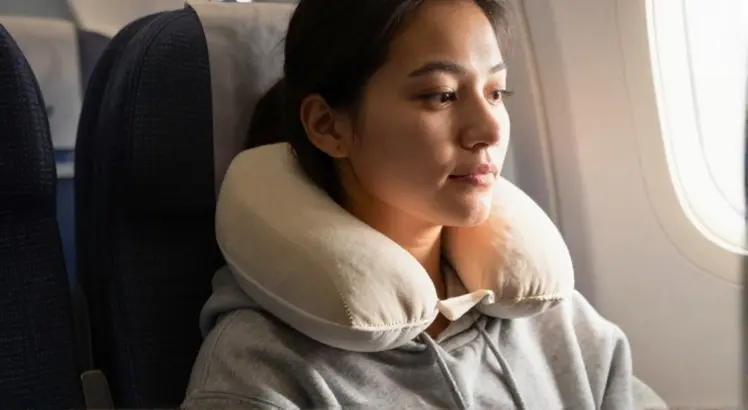
If you have ever woken up on a flight with a stiff neck, you already know how important it is to know whats the proper way to wear a travel pillow. Most people simply loop the U-shaped cushion around their neck and hope for the best. Unfortunately, that common approach often leads to more aches than relief. The secret to arriving fresh at your destination lies in the direction, fit, and type of travel pillow you use. This guide will walk you through the correct orientation, sizing tricks, and pro tips to transform your travel pillow from a useless accessory into a genuine sleep aid.
Why Wearing a Travel Pillow Correctly Matters
Travel pillows are designed to prevent your head from drooping into awkward positions while you sleep sitting up. When worn incorrectly, they can push your head forward, strain your neck muscles, and even restrict airflow. A proper fit keeps your cervical spine in neutral alignment, the natural curve that reduces pressure on joints and discs. Understanding whats the proper way to wear a travel pillow is the first step toward pain-free travel naps. The difference between a restorative rest and a sore neck often comes down to a simple rotation of the pillow.
Many travelers blame the pillow when the real problem is how it is positioned. A travel pillow should cradle the neck, not shove the chin into the chest. It should fill the gap between your shoulder and head without creating a forward head posture. Learning the correct method also helps you avoid the dreaded bobblehead effect, which can lead to micro-awakenings that leave you feeling groggy. Even premium memory foam models fail if they are worn backwards.
The Classic U-Shaped Pillow: Front or Back?
The most heated debate in travel comfort revolves around the opening of the U-shaped pillow. Should the gap sit at the front of your neck, or behind your neck? The answer depends on your sleeping style, seat pitch, and the pillow’s thickness. However, one orientation consistently outperforms the other for most body types and airline seats. Let’s break down both methods so you can test them on your next trip.
Opening at the Front (The Backward Method)
Wearing the travel pillow with the open gap under your chin is the most common approach, and visually it looks correct. In this position, the thick padded U curves around the back of your neck. When you lean back into a seat, the cushioning prevents your head from falling backward. This works well if you have a window seat and can rest your head against the fuselage or a bulkhead. The pillow acts like a soft collar, gently limiting side-to-side movement.
However, this orientation often becomes a problem in standard economy seats. When the thick part sits behind your neck, it pushes your head forward because the seat back is already reclined slightly. For many people, this creates a forward head tilt that strains the muscles at the base of the skull. If you feel your chin being forced toward your chest, the backward method is not right for you. It also leaves no support under your chin when you naturally slump forward during deep sleep.
Opening at the Back (The Forward Method)
Placing the opening of the U at the back of your neck is often recommended by chiropractors and frequent flyers. In this configuration, the thickest part of the pillow rests under your chin. This provides a shelf that prevents your head from dropping forward, the most common cause of neck pain during in-flight naps. Your cervical spine stays in a more neutral position because the support comes from the front, resisting gravity as you drift off.
This forward method works brilliantly on modern slimline airplane seats that have a fixed headrest angle. The narrow part of the U sits behind your neck, taking up almost no space between your shoulders and the seat back. You will immediately feel less forward pressure. If your pillow has a snap or toggle closure at the front, you can twist it around so the fastener sits at the back. This tiny adjustment is the single best answer to whats the proper way to wear a travel pillow. It transforms the pillow into a chin guard, keeping your airway open and your head aligned.
One thing to watch for: some U-shaped pillows are shaped asymmetrically with a taller neck roll on one side. Those may only work in one direction. Check the label or product images. If you need to swap orientation, simply spin the pillow 180 degrees. The difference in comfort can be immediate.
Step-by-Step: How to Wear a Travel Pillow for Maximum Comfort
Once you know the forward method, applying it correctly requires a few tweaks. Follow these steps to dial in your setup and banish neck stiffness. Remember, a travel pillow is not a one-size-fits-all accessory. Small adjustments make a huge impact.
First, fluff or inflate the pillow to about 70 percent firmness. A pillow that is over-inflated pushes too hard against the throat, while an under-inflated one collapses. Position the thicker portion, or the widest part of the U, directly under your chin. The arms of the U should drape over your collarbones. Let the narrow section rest lightly against the back of your neck. You should be able to lean your head back without hitting a bulky lump.
Second, adjust the seat headrest. If the headrest wings can be bent forward, angle them so they cradle your temples. This team effort between the seat and your pillow locks your head in place. For even more stability, attach the pillow’s snap closure loosely, leaving just enough room to swallow comfortably. Tight closures can feel restrictive and raise your blood pressure slightly.
Third, use a thin airline blanket or scarf to fill any remaining hollow space between your neck and the pillow. Roll it up and tuck it behind the narrow part of the U. This customizes the fit for petite necks. A proper wrap is so important that we created a detailed usage guide for travel pillows to walk you through every body type and seat configuration.
Specialty Pillows: J-Shapes, Wraps, and Inflatable Collars
Not all travel pillows follow the U shape. Understanding whats the proper way to wear a travel pillow changes when you move into ergonomic designs. J-shaped pillows, for instance, offer side support for the head and chin simultaneously. The long tail of the J should curve over your shoulder and tuck under your chin, or brace against the seat belt buckle area. These pillows are ideal for side sleepers and work best in window seats.
Wrap-style pillows, like the TRTL or tubular fleece wraps, sit like a scarf. You position the internal plastic support under your chin or against the side of your jaw. These eliminate the back-of-neck bulk entirely. Inflatable forward-facing collars, which stand tall like a neck brace, are worn with the tallest part under the chin. They force your head upright and can look odd, yet they are among the most effective for preventing forward slump.
Memory foam models often come with a contoured back. If your pillow has a cutout space for the spine, that belongs at the back. Flipping a contoured pillow reverses the ergonomic support and can create a pressure point. Always check the manufacturer instructions, but the forward chin-shelf principle remains the gold standard for most travelers.
Common Mistakes and How to Fix Them
Even with the correct orientation, a few bad habits can sabotage your rest. Recognizing these errors will help you master exactly whats the proper way to wear a travel pillow at 35,000 feet. Avoid these pitfalls for a pain-free landing.
- Wearing the pillow too high on the neck, which allows the head to roll sideways over the top. The pillow should sit low, almost touching the top of your shoulders.
- Over-inflating an air pillow until it feels rock hard. A firm balloon pushes against sensitive carotid arteries and the throat. Deflate slightly after blowing it up until the surface yields under gentle finger pressure.
- Letting the pillow twist during use. A twisted U becomes an uneven lump. Smooth it flat and keep the seams straight along your collarbone.
- Ignoring the airplane headrest wings. Always fold them inward to create a lateral brace. Without this, no pillow will keep your head from lolling into the aisle.
If you are still struggling after fixing these issues, the pillow itself may be the wrong shape for your frame. A curated selection of top-rated travel pillows can help you find a better match for your neck length and sleeping position. The perfect pillow worn the wrong way is still uncomfortable, but a well-worn design tuned to your body is transformative.
How to Wear a Travel Pillow for Side Sleeping and Chin Support
Side sleepers face the toughest battle on a plane. A standard U-shaped pillow worn at the front still leaves the side of the head unsupported. To fix this, rotate the pillow so the thickest section sits against the side of your neck, the direction you tend to lean. In a window seat, let that thick part cushion between your head and the wall. If you are in a middle or aisle seat, a J-pillow or a high-sided memory foam model will stop your head from hanging off your shoulder.
For chin support, the forward method is unbeatable. Some travelers add a small inflatable wedge under the chin section to create an even higher shelf. This prevents the jaw from dropping open and reduces snoring. A gentle pressure on the chin can also trigger a calming reflex, helping you fall asleep faster. According to sleep experts at the Sleep Foundation, maintaining a straight airway during upright sleep is crucial for proper rest and oxygen flow. A correctly positioned travel pillow makes that possible.
Adjusting Your Pillow for Different Modes of Travel
Airplanes are not the only place you need to know whats the proper way to wear a travel pillow. Bus seats, train chairs, and even car headrests change the ergonomic equation. On a bus with a high, straight back, the backward method with the opening at the front often works better because there is zero recline. In a car, a wrap-style pillow worn like a scarf provides side impact protection as well as sleep support. You can tuck the tail of a J-pillow between the seat belt and your chest for a hands-free anchor.
On trains with adjustable winged headrests, imitate the airplane setup by using the forward method and folding the wings inward. If you commute on a ferry, a simple inflatable collar is easier to stow and can be worn with the opening at the back. Temperature also matters. A fleece cover in a cold cabin adds coziness and prevents skin irritation. In hot climates, a breathable mesh cover keeps you cool and dry.
Frequently Asked Questions
Which way should a travel pillow face?
For most people in upright seats, the pillow should face with the thick part under the chin and the opening at the back. This forward method prevents forward head slump. If you can recline significantly, wear the thick part behind the neck with the opening under the chin. Test both on a short leg to see which relieves tension in your shoulders and jaw.
How do I keep a travel pillow from pushing my head forward?
Switch to the forward-facing orientation so the bulk is under your chin, not behind your neck. Also, deflate inflatable pillows to about 70 percent capacity and use a rolled scarf behind the neck to fill only the gaps. If the pillow still pushes you forward, it may be too thick for your neck length. Look for low-profile memory foam options or adjustable toggle models that you can loosen.
Can you wear a travel pillow upside down?
Yes, if the pillow is symmetrical and you want extra height under the chin. Flipping a U-shaped pillow upside down can raise the support by a few inches, which helps taller individuals. However, asymmetrical pillows with a tapered neck rest will fit awkwardly upside down and may dig into your throat. Always check the pillow’s design before inverting it.
Are inflatable travel pillows comfortable when worn correctly?
When adjusted properly, inflatable pillows offer excellent support with the advantage of packability. The key is to under-inflate them slightly so they cradle rather than bounce. Some premium inflatable pillows have a flocked surface or a micro-velvet cover for better skin feel. Worn with the opening at the back, they provide a light chin shelf that works well for short flights and bus rides.
Conclusion
Knowing whats the proper way to wear a travel pillow changes everything about your journey. The simple act of rotating your pillow so the thickest part supports your chin can erase the neck pain that ruins the first day of a trip. Pair the correct orientation with a well-fitted pillow that matches your sleeping style, and you will finally sleep upright without strain. Whether you prefer a classic U-shape, a J-pillow, or an inflatable collar, the golden rule stays the same: support the chin to keep the head neutral. Test the forward method on your next flight, adjust the firmness, and use your seat’s headrest as a partner. Your neck will thank you when you land refreshed and ready to explore.
Now that you understand the proper technique, it is time to evaluate your gear. Explore our expert review of the best airplane travel pillows to find a model designed for your body and travel style. A small investment in the right pillow and a few minutes spent adjusting it will transform your in-flight experience forever.