
Waking up to a flat, lumpy pillow is disappointing. You sink your head down, expecting a cloud-like cradle, but the filling has shifted into stubborn clumps. If you have ever asked how to wash a fluffy pillow without ruining its loft, you are not alone. Proper cleaning restores that soft, airy feel and extends the life of your favorite bedding.
Fluffy pillows collect sweat, oils, dead skin cells, and dust mites over time. Ignoring wash day can lead to allergies, breakouts, and an odor that disrupts sleep. Learning how to wash a fluffy pillow correctly means you preserve the filling, prevent mildew, and keep that hotel-like fluff intact.
In this guide, I will walk you through exactly how to clean, dry, and revive all types of fluffy pillows. Whether you own a down comforter-style pillow or a budget-friendly polyester fill, these steps will protect your investment and improve your sleep hygiene.
Why Fluffy Pillows Need Special Care
Fluffy pillows are engineered to trap air inside their fibers. That trapped air is what creates the soft, supportive surface you love. When moisture, body oils, or aggressive washing crushes the fill, the pillow loses its ability to spring back. You end up with a deflated sack that offers no neck support.
Unlike flat memory foam or solid latex pillows, fluffy styles are filled with loose clusters. Down, feather, and synthetic down alternative fills can shift easily during the wash cycle. Without the right technique, those clusters mat together, and drying can take days if not managed properly. Understanding the material inside your pillow is the first step toward cleaning success.
Most standard fluffy pillows fall into three categories. Down pillows contain the soft undercoating from ducks or geese. Down alternative pillows use polyester microfiber designed to mimic down. Polyester cluster pillows use a bouncier, crimped fiberfill that traps air. Each type requires a slightly different moisture and heat tolerance, but the core washing method stays consistent.
Step 1: Check the Care Label Before You Start
The instruction tag sewn into your pillow is non-negotiable. Manufacturers test their specific fabric shells and filling blends to determine safe wash methods. Some down pillows are labeled dry clean only because the ticking material may not hold up to water. Ignoring this can cause the seam to burst in the machine.
Look for water temperature limits and bleach warnings. If the tag says “hand wash only,” the filling is probably too delicate for a spin cycle. For most fluffy polyester and down alternative pillows, machine washing on a gentle cycle is safe. As thorough pillow cleaning guide explains, even washable pillows benefit from a pre-treatment inspection for rips or weak seams.
If the tag is missing or faded, test a small hidden seam by pulling gently on the fabric. Any fragility means you should use a mesh laundry bag and avoid hot water. When in doubt, hand washing is always the gentler backup plan. I always snap a photo of the care label before tossing it in the wash so I can double-check settings later.
Step 2: Pre-Treat Stains and Odors
Yellow stains on pillows come from sweat and saliva soaking through the pillowcase over time. Those protein-based stains bond with the fill if they are not treated before the main wash. Create a paste using hydrogen peroxide and a sprinkle of baking soda, then dab it onto the stained areas. Let the paste sit for 15 minutes before proceeding.
For stubborn odors, a pre-soak with oxygen cleaner works wonders. Fill a bathtub or large utility sink with lukewarm water and dissolve the oxygen powder completely. Submerge the pillow and gently press out air bubbles so the solution penetrates the core. A 30-minute soak lifts trapped body oils and kills odor-causing bacteria without bleaching the fabric.
My favorite trick for mildew-prone environments is to add half a cup of white vinegar during the pre-rinse. The acid breaks down mineral buildup from hard water and neutralizes smells naturally. If you want more natural deodorizing methods, I have a full breakdown on using baking soda to freshen pillows that pairs well with this routine.
How to Machine Wash a Fluffy Pillow
Load Two Pillows at Once
Top-loading machines with an agitator can ruin a fluffy pillow in seconds. The center post grabs and twists the fill, creating permanent clumps. If you must use a top loader, place pillows vertically along the drum sides and never stack one directly over the agitator. A front-loading washer is far superior because it uses a tumbling motion that mimics hand washing.
Always wash two pillows together to balance the drum. When a single pillow absorbs water, it becomes heavy on one side, causing the machine to vibrate and walk across the floor. Pairing pillows keeps the spin cycle smooth. If you only have one fluffy pillow, throw in a few clean white towels to act as counterweights.
Choose a Gentle Detergent
Avoid powder detergents because they often fail to dissolve completely in cold water. The undissolved residue clings to down clusters and synthetic fibers, leaving a gritty texture inside the pillow. Use a mild liquid laundry detergent and measure exactly the amount for a small load. Excess soap creates too many suds, which means extra rinse cycles.
Never pour fabric softener or dryer sheets into this load. The waxy coating they leave on fibers smothers the fill and makes it impossible to fluff back up. If you crave light scent, add three drops of essential oil onto a wool dryer ball instead. You can find more details about handling oversized pillows in my article on washing larger pillows in the machine.
Select the Correct Cycle Settings
Set your machine to the delicate or gentle cycle with warm water. Hot water can damage the fabric shell and strip natural oils from down feathers. Cold water, on the other hand, might not dissolve body oils effectively. Warm water hits the sweet spot by cleaning deeply without causing the shell to shrink.
Turn on the extra rinse option if your machine has one. Fluffy pillows trap soap in their deepest layers, and leftover detergent attracts dirt later. After the cycle finishes, open the door and sniff the pillow. If you smell any soapy fragrance, run a second rinse cycle with plain water. The extra time prevents skin irritation and keeps the fill breathable.
How to Hand Wash a Fluffy Pillow
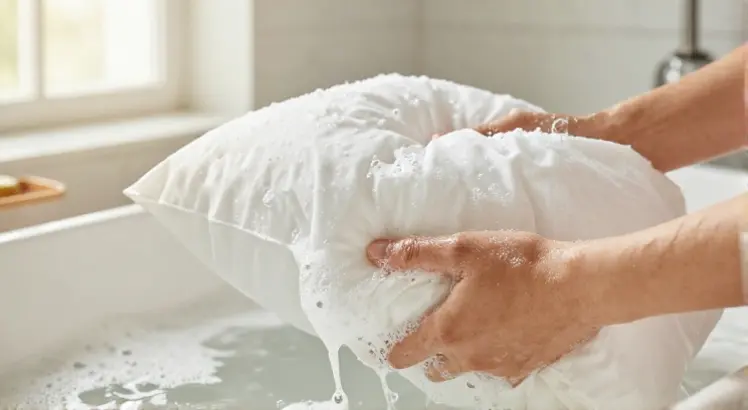
Some down pillows and antique feather pillows cannot handle machine agitation. Hand washing gives you full control over pressure and prevents a broken seam from releasing thousands of feathers. Fill a clean bathtub with lukewarm water and add a teaspoon of gentle liquid detergent. Swirl the water until it is lightly sudsy.
Submerge the pillow and press it gently with your palms. Avoid wringing or twisting because that motion breaks down feather quills and synthetic fibers. Work the soapy water through the fill by compressing the pillow like you would knead bread dough softly. Let it soak for ten minutes, then drain the tub.
Refill with clean water and press the pillow to release leftover soap. Repeat this rinse process until the water runs completely clear. To remove excess water without wringing, press the pillow flat between two thick bath towels. Roll the towel and pillow jelly-roll style and press down firmly to absorb moisture before moving to the drying stage.
Drying Your Fluffy Pillow Without Lumps
The Tumble Dry Trick with Tennis Balls
Drying is where most pillows lose their fluff. A damp pillow left to air dry slowly can develop mildew deep inside the fill. The secret weapon is a pair of clean tennis balls or wool dryer balls. Throw them into the dryer with the pillow, and the balls will bounce around, breaking apart wet clumps and beating the fibers back into shape.
Set the dryer to the lowest heat setting. High heat destroys down clusters and melts the fine threads of polyester fills. The cycle will run for two to three hours, and you should pause every 30 minutes to fluff the pillow by hand. Open the dryer, grab the pillow, and shake it vigorously to redistribute the fill. Then resume the cycle.
A common mistake is pulling the pillow out too early because the shell feels dry. The outer fabric dries quickly, but the core holds onto moisture. Check for cool, damp spots deep inside by pressing your chin into the pillow. If you feel any chill, it needs more drying time. Patience here prevents musty smells from ruining your hard work.
Air-Drying in Direct Sunlight
For pillows labeled “do not tumble dry” or for those in humid climates, sun drying works remarkably well. Lay the pillow flat on a clean drying rack outside in direct sunlight. Prop it up so air circulates underneath. Flip the pillow every hour and punch it gently to release clumps that form as moisture evaporates.
UV rays act as a natural disinfectant, bleaching leftover stains and killing dust mites. Bring the pillow inside before sunset to avoid dew, and give it a final fluff indoors. This method takes a full day, but the fresh outdoor scent is worth the wait. Always ensure the pillow is completely dry before putting a pillowcase on it.
How Often Should You Wash Fluffy Pillows?
Washing frequency depends on your usage and whether you use a protective pillowcase. With a zippered allergen-blocking cover, you can wash the pillow itself every three to four months. Without that barrier, body oils and moisture seep directly into the fill, meaning a wash every six to eight weeks keeps the pillow healthy.
If you own a fluffy body pillow or a reading pillow that you lean against daily, it collects more skin cells and sweat. A monthly wash schedule is safe as long as you follow the gentle cycle rules. Overwashing can wear down the shell, so always inspect the seams before each cycle.
Common Mistakes That Ruin Fluffy Pillows
- Using bleach on down pillows weakens the keratin in feathers and turns them brittle.
- Wringing the pillow to remove water tears the fabric and rearranges fill into hard knots.
- Skipping the extra rinse leaves detergent that attracts grime and irritates skin.
- Drying on high heat melts synthetic fibers and scorches natural down clusters permanently.
- Storing a damp pillow in a plastic bag creates an instant mildew breeding ground.
Frequently Asked Questions
Can you put a fluffy pillow in the washing machine?
Yes, most polyester and down alternative pillows are safe for front-loading washing machines on a gentle cycle. Always check the care tag first. Wash two pillows at a time to balance the load, and use warm water with a mild liquid detergent. Avoid top-loading machines with a central agitator if possible.
Why does my fluffy pillow clump after washing?
Clumping happens when the fill gets saturated unevenly and is not separated during drying. Agitators in washing machines twist the fibers, and high spin speeds compact the wet clusters. Adding three clean tennis balls to the dryer loosens these clumps. Pausing the cycle every half hour to manually fluff the pillow also prevents matting.
How do I restore the fluff after washing?
Once the pillow is completely dry, hold it by opposite corners and shake it vigorously for a full minute. Grab the center and pull the sides apart, working your way around the perimeter. The goal is to break any weak fiber bridges that formed during drying. Running the pillow through a no-heat air fluff cycle with dryer balls adds the final loft.
Can I use baking soda to freshen a pillow between washes?
Absolutely. Sprinkle baking soda liberally over the pillow surface and let it sit for several hours or overnight. The powder absorbs odors and oil. Vacuum it off using an upholstery attachment. This trick extends the time between full washes and leaves your pillow smelling fresh. Just make sure to remove all residue before sleeping on it.
Is it safe to wash memory foam fluffy pillows the same way?
No, memory foam should never be submerged in water or put in a washing machine. The foam core acts like a giant sponge and can tear during the spin cycle. Instead, spot clean with a damp cloth and mild soap, then press with a dry towel to absorb moisture. Let the pillow air dry in a ventilated area for at least 24 hours.
Fluffing Your Way to Better Sleep
Knowing how to wash a fluffy pillow properly transforms your bedtime experience. No more musty odors, no more wrestling a limp sack of clumps into a pillowcase. You get a crisp, lofty pillow that supports your head and neck exactly as it did on day one. The process only takes a few hours of active attention every few months.
Remove the fear of ruining an expensive down pillow by following the gentle steps you learned today. Check the label, treat stains early, always balance the machine, and never rush the dry cycle. The tennis ball trick alone can salvage many pillows that seemed beyond saving. Fresh, fluffy pillows are not a luxury reserved for hotels, they are your nightly reward for proper care.