
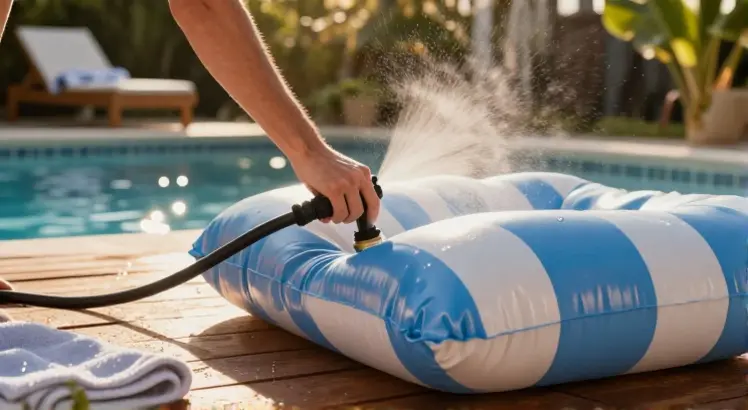
If you have ever fought with a pool cover during winter, you know that a quality air pillow is a game changer. Learning how to inflate an air pillow for your pool the right way prevents water from pooling on the cover and protects your pool walls from ice damage. Whether you are closing an above-ground pool for the first time or you need a refresher on inflation technique, this guide walks you through every step.
I have set up dozens of pool air pillows over the years and I have learned which methods work, which tools speed up the process, and which mistakes can ruin a pillow before the first freeze. I will share those hard-won insights so you can inflate your pool pillow quickly and correctly, avoiding headaches when the temperature drops.
Understanding Pool Air Pillows and Why Proper Inflation Matters
A pool air pillow, often called an ice compensator, sits beneath your winter cover to absorb pressure created by expanding ice. When water freezes it expands outward. Without a properly inflated pillow in the center of the pool, that force pushes against your pool walls and can cause cracks or dents. The pillow takes the brunt of the expansion, safeguarding your investment.
Proper inflation directly affects how well the pillow does its job. An under-inflated pillow floats too low, which lets ice push straight into the walls. An over-inflated pillow can pop when temperatures drop and the air inside contracts, leaving you with no protection at all. Following pool winterizing best practices helps you land in that safe middle zone every time.
Pre-Inflation Checklist: What to Do Before You Start
A few minutes of preparation save you a lot of frustration later. Gather all the tools you need, inspect the pillow, and clear your workspace before you ever open the valve.
- Unfold the air pillow completely and examine every seam and surface for punctures. Even a tiny hole causes slow leaks that ruin your winter protection.
- Identify the valve type. Most pool pillows use a Boston valve (two caps, one for inflation and one for deflation) or a simple pinch valve. Knowing which you have determines the best inflation method.
- Make sure the area around the pool deck is free of sharp sticks, rocks, or pool toys that could snag the pillow as you maneuver.
- Choose your inflation tool. Options include your lungs, an electric air pump, a shop vacuum with a blower function, or a manual foot pump. Have the correct nozzle adapter ready.
- Confirm you have the right size pillow for your pool. Our guide on choosing the right pool pillow size breaks down dimension recommendations for round and oval pools.
Step-by-Step: How to Inflate an Air Pillow for Your Pool
Every pool pillow inflation follows the same basic flow, but the tool you choose changes the speed and effort level. Below I walk through four reliable methods, starting with the simplest and moving to faster powered options.
Method 1: Manual Lung Inflation
Lung power works fine for smaller pillows and is completely free. Make sure the pillow is dry and the valve area is clean before you place your mouth on it.
- Open the inflation cap on the Boston valve or pinch the valve open if using a pinch-style.
- Take a deep breath, seal your lips around the opening, and blow steadily. You will feel resistance as the pillow begins to take shape.
- Pause every few breaths to let the pillow expand naturally. Do not force air in too quickly, as moisture from your breath can accumulate inside if you rush.
- Continue until the pillow feels firm but still yields slightly when you press your palm into the center. Snap the cap closed immediately to trap the air.
Method 2: Using an Electric Air Pump
An electric pump is the fastest, most consistent way to inflate a large pool pillow. Most pumps come with a set of nozzle adapters, and one will fit the Boston valve perfectly.
- Attach the appropriate nozzle to the pump hose. The adapter should create a snug seal inside the inflation port.
- Open the inflation valve. If the pillow has one-way flaps, make sure the nozzle tip pushes them open slightly to allow air in.
- Turn the pump on its lowest setting first. A sudden high-pressure burst can strain the seams. Gradually increase the airflow once the pillow starts to fill.
- Watch the pillow’s shape as it expands. You want uniform, symmetrical inflation with no bulging in one spot. Stop every minute to check firmness.
- When the pillow is firm but still has a slight give, switch off the pump and quickly close the valve.
Method 3: Shop Vacuum Blower Function
If you own a wet/dry shop vacuum with a blower port, you have an incredibly powerful inflation tool. This method works wonders for extra-large pool pillows.
- Move the vacuum hose to the blower exhaust port. Use a cone nozzle if you have one, but even the bare hose end works if you hold it carefully.
- Hold the nozzle about two inches from the open valve. Do not insert it directly, because the rush of air is strong enough to overstretch the material.
- Pulse the airflow by turning the vacuum on for two seconds at a time. This gentle approach fills the pillow evenly without overheating the motor or shocking the seams.
- After the pillow is three-quarters full, switch to shorter pulses and check firmness after each one. Close the valve the moment it reaches the desired fullness.
Method 4: Inflating Without a Pump (Creative Alternatives)
Sometimes you are stuck without a pump and your lungs need a break. A few household items can pinch-hit as emergency inflation tools.
- Use a hair dryer on the cool setting only. Never use heat, which can weaken the vinyl and cause the seams to separate. Hold the dryer nozzle close to the open valve and let the cool stream push air inside.
- A manual bike pump with a ball needle adapter can work for pillows with a pinch valve. Insert the needle carefully to avoid puncturing the inner flap.
- Even a large plastic bag can act as a bellows. Scoop air into the open bag, twist the neck to trap it, then squeeze the air into the valve. This method takes time and patience.
How to Know Your Pool Pillow Is Properly Inflated
The classic beginner mistake is inflating until the pillow is rock hard. A pool pillow works best when it has about 75 to 80 percent of its maximum capacity, leaving room for air to compress as ice expands. To test firmness, press your thumb into the center of the pillow. The surface should indent about one inch without a battle. If it feels taut like a drum, let a little air out. If your whole hand sinks in deeply, add more air.
A correctly inflated pillow floats on the water surface with the center slightly higher than the edges. It should sit comfortably in the middle of the pool, held in place by the cover, without riding up the walls. After you secure the cover, walk around and eyeball the pillow from several angles. Any tilt or lopsidedness usually means one side received more air. Tethering the pillow in the center with light string helps, but correct inflation keeps it balanced on its own.
Common Mistakes That Can Ruin Your Pool Pillow
Even experienced pool owners slip into bad habits. Avoiding these pitfalls will extend the life of your air pillow dramatically.
- Over-inflation. The number one cause of split seams and burst pillows. Air contracts in cold weather, but the material also becomes less flexible. Leave that safety margin of softness.
- Ignoring a slow leak before placing the pillow under the cover. Always do a leak test. Inflate the pillow and leave it for an hour on the lawn. If it sags noticeably, patch the hole or replace the pillow.
- Using sharp tools to open the valve. Pocket knives, screwdrivers, and even car keys can nick the rubber gasket. Use your fingernail or a blunt plastic valve cap to pry stubborn caps loose.
- Placing the pillow on rough ground while inflating. Concrete, gravel, and wood decking can scrape the underside. Spread a clean tarp or an old blanket under the pillow before you start.
- Forgetting to secure the valve cap tightly. A loose cap is just a planned leak. Double-check both the inflation and deflation caps after filling, even if you heard the click.
Frequently Asked Questions
Can I use a hair dryer on the warm setting to inflate my pool pillow faster?
No, you should never use heat. The vinyl or PVC material softens under warm air and the glued seams can weaken or separate under pressure. Use the cool shot or no-heat setting exclusively, and only as a temporary solution.
How long does an inflated pool pillow stay firm?
A properly sealed pillow with no leaks should hold air throughout the entire winter season. Minor pressure loss is normal as temperatures drop, but the pillow will still float and provide ice compensation. If you notice it deflating within the first week, you likely have a hidden puncture.
Do I need to tie the air pillow down in the center of the pool?
Tying the pillow is optional but highly recommended. Use two pieces of light nylon string tied to the pillow grommets and anchored to the pool edges or a weighted jug. This keeps the pillow centered when wind or water movement would otherwise shove it to one side.
Can I repair a small hole and still use the pillow this winter?
Yes, vinyl repair kits made for pool liners and air mattresses work well on pool pillows. Clean the area, apply the adhesive patch, and let it cure fully before inflation. Always test the repair by leaving the pillow inflated overnight before placing it under the cover.
Is one air pillow enough, or do I need multiple pillows?
For round pools up to 24 feet, one large air pillow is sufficient. Oval or rectangular pools often benefit from two smaller pillows spaced evenly apart. The idea is to create symmetrical support points so ice pressure distributes evenly across the cover.
Wrapping Up: Confidently Inflate Your Pool Air Pillow
Mastering how to inflate an air pillow for your pool comes down to using the right tool, respecting the fill level, and preventing leaks before they start. An electric pump makes the job effortless, but even a few minutes of manual inflation, done correctly, sets you up for a worry-free winter.
Take your time during inspection, aim for that soft-yet-firm sweet spot, and always test for air loss before you button up the cover. Once pool season ends, you will need to deflate and store your pillow properly to keep it in great shape for next year. Our seasonal pillow storage guide walks you through cleaning, drying, and packing your investment safely.
With the pillow centered and the cover tensioned, you can walk away knowing your pool walls are shielded against winter’s worst. A little attention now prevents expensive repairs in spring, and that is exactly why a properly inflated air pillow is non-negotiable.