
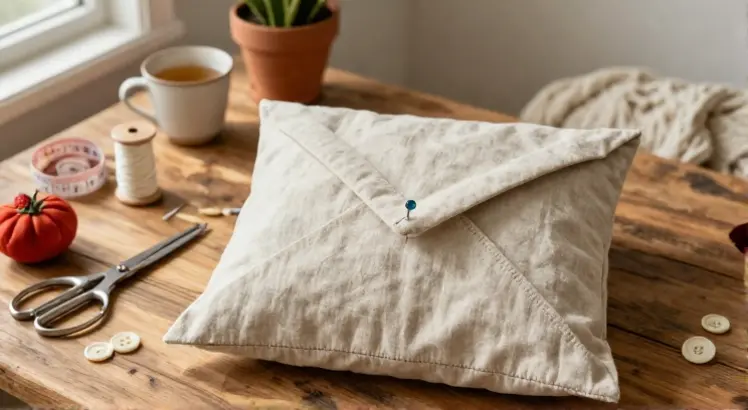
Learning how to make throw pillow covers without zipper opens up a world of easy, affordable home decor. You do not need a sewing machine or advanced skills to create covers that look professional. With a few simple techniques, you can change the look of a room in under an hour. This guide shows you every step, from choosing fabric to finishing the closure.
Many people avoid DIY pillow covers because they think a zipper is required. The truth is, multiple closure methods hide the opening completely without extra hardware. These no-zipper designs are often faster to make and easier to wash. You will love how approachable this project can be.
Why Skip the Zipper?
Skipping the zipper reduces sewing time and removes a common frustration for beginners. Installing a zipper often requires a special presser foot and careful pinning. Without it, you avoid puckering, uneven edges, and broken needles. The finished cover still looks neat and holds the insert securely.
Zipper-free covers are also easier to open for frequent washing. An envelope overlap or tie closure lets you remove the insert in seconds. This makes them ideal for households with kids, pets, or allergy concerns. You can change pillow covers weekly without wrestling with a sticky zipper.
Another advantage is the cost factor. Zippers can add up if you are making multiple covers. Leaving them out saves money without sacrificing function. You can invest that extra budget in higher-quality fabric instead.
Types of No-Zipper Pillow Cover Closures
Several closure styles work perfectly without a zipper. Each has its own look and level of difficulty. You can choose based on your fabric type, the room’s style, and your comfort with sewing. Once you master one, you can easily adapt it for other home decor projects.
- Envelope closure: Two overlapping back panels create a pocket that hides the opening. This is the most popular and beginner-friendly method.
- Tie closure: Fabric ties or ribbon sewn along the open end keep the cover closed. This adds a soft, romantic touch to farmhouse or cottage decor.
- Button closure: Large buttons and buttonholes, or decorative buttons with elastic loops, give a tailored finish. This looks charming on rustic or vintage pillows.
- Fold-over with snaps or hook-and-loop tape: A simple fold secured with sew-on snaps or adhesive hook-and-loop tape works well for no-sew projects.
How to Make an Envelope Pillow Cover Step-by-Step
The envelope pillow cover is the foundation of no-zipper sewing. It uses two back panels that overlap by several inches, so the pillow form stays hidden. You can complete one cover in about 30 minutes once you have the measurements down. This method works for square, rectangular, and even round pillows with slight adjustments.
What You Will Need
- Medium-weight fabric like cotton, linen, or velvet
- Pillow insert (18×18 inches is standard)
- Sewing machine or needle and thread
- Fabric scissors, pins, or sewing clips
- Iron and ironing board
- Measuring tape
Step 1: Measure Your Pillow Insert Correctly
Before you cut any fabric, take accurate measurements of your pillow form. Lay it flat without compressing it, then measure the width and height. For an 18-inch square insert, use 18 inches as your base dimension. Do not rely on the label size only, because filled inserts can vary slightly.
Proper measuring prevents a cover that is too tight or too loose. If you need more guidance, learn how to measure throw pillows accurately before moving forward. A precise measurement ensures the finished cover fits smoothly without shifting. This simple step saves fabric and frustration later.
Step 2: Cut the Fabric Pieces
You will cut one front panel and two back panels that overlap. The front piece equals the pillow size plus one inch for seam allowances. For an 18-inch pillow, cut a square of 19×19 inches. This gives you a half-inch seam allowance on all four sides.
The two back panels need to cover the width and create an overlap. Cut each back panel 19 inches wide by 13 inches tall, for a standard 18-inch insert. The height includes a half-inch seam allowance at the top or bottom, depending on the panel. The overlap depth should be at least 4 inches to prevent the insert from peeking out.
If your pillow is a different size, use this formula. Front piece: (insert width + 1 inch) by (insert height + 1 inch). Each back panel: (insert width + 1 inch) by (insert height divided by 2, plus 3 inches). This built-in math accounts for seam allowance and generous overlap. Always double-check your numbers before cutting.
Step 3: Hem the Back Opening Edges
Take one back panel and fold over one long 19-inch edge by a quarter inch, then another quarter inch. This double-fold hem encloses the raw edge neatly. Press with an iron and pin in place. Sew a straight stitch close to the inner folded edge.
Repeat with the second back panel. These hemmed edges will be the visible opening on the back of the pillow. A crisp hem adds durability and prevents fraying during washing. If you are making a no-sew version, use iron-on hem tape to secure the fold instead of stitching.
Pressing after every seam is important. It flattens the fabric and gives the cover a professional finish. Take your time with this step because sharp edges make the final product look high-end. A quick iron now saves you from a lumpy cover later.
Step 4: Assemble the Cover
Lay the front panel right side up on your work surface. Place one back panel right side down, aligning the raw edges with the top of the front piece. The hemmed edge should face toward the center of the pillow. Lay the second back panel right side down, aligning its raw edges with the bottom, so the hemmed edges overlap in the middle.
Pin all layers together around the entire perimeter. Use plenty of pins near corners to keep the fabric from shifting. If you have sewing clips, they work even better for thick fabrics. Check the overlap before sewing to ensure there are no gaps where the insert could show.
Sew around all four sides with a half-inch seam allowance, backstitching at the beginning and end. Pivot at corners with the needle down for sharp ninety-degree turns. Trim the corners diagonally to reduce bulk, but do not cut into the stitching. Turn the cover right side out through the back opening and gently push out the corners with a pointed tool.
If you prefer a visual reference, you can find a detailed envelope pillow cover pattern from an expert sewing resource. Their instructions complement what you are doing here. Give the cover a final press and insert the pillow form. Fluff and shape until the cover fits snugly.
No-Sew Pillow Cover Methods
You can still make beautiful throw pillow covers even if you do not own a sewing machine. Fabric glue and fusible bonding tape replace stitches for a clean finish. These no-sew methods work best for decorative pillows that get light use. They are also perfect for renters or quick seasonal updates.
For an envelope cover, follow the same measuring and cutting steps. Instead of sewing the back panel hems, apply iron-on hem tape along the folded edge and fuse with an iron. To join the front and back panels, use a strong fabric glue like one made for upholstery. Place a thin line of glue along the seam allowance, press together, and let it dry under a heavy book.
Another no-sew idea uses a single large fabric square and four corner ties. Wrap the fabric around the insert like a gift, then tie the ends at the corners. This style looks intentional and works with lightweight cotton or linen. You can change the ties to match the season without any permanent changes.
Making a Tie-Closure Throw Pillow Cover
A tie-closure pillow cover brings a cozy, relaxed vibe to any space. This design uses a simple pillowcase shape with fabric ties or ribbon at the open end. You can sew the cover entirely with straight seams, and no zipper foot is needed. The ties become a design feature rather than something to hide.
Start by cutting one large rectangle of fabric. The width equals the pillow width plus one inch, and the length is twice the pillow height plus eight inches for the flap and hem. Fold one short edge under twice to create a clean hem for the opening. This will be the edge where the ties attach.
Next, cut four fabric strips or use pre-made ribbon. Sew three ties to the outside of the hemmed edge and three to the inside of the unhemmed edge, matching their positions. Place the fabric right sides together, fold it in half so the ties line up, and sew the two long side seams. Turn right side out, insert the pillow, and tie the bows closed.
Button Closure Pillow Covers Without a Zipper
Button closures elevate a throw pillow into a more polished accent piece. They work especially well with rustic wood buttons or mother-of-pearl details. While this method requires a bit more sewing knowledge, it is still far easier than inserting a zipper. You can even hand-sew the buttonholes if your machine lacks that function.
Construct the cover similarly to the envelope style, but leave one edge open with a hemmed flap. Mark and sew buttonholes on the top flap at even intervals. Attach buttons to the bottom flap directly underneath the holes. The buttons become a decorative back detail that contrasts nicely with solid fabrics.
Common Mistakes to Avoid
Even simple DIY projects can go wrong without a few careful checks. Always pre-wash your fabric to prevent shrinkage after the first laundry cycle. Some cotton fabrics can shrink by up to ten percent. Washing and drying the fabric first means your cover will continue to fit perfectly.
Another error is cutting the back panels too small for the overlap. A shallow overlap of only two inches may gape open when the pillow shifts. Aim for a minimum of four inches of overlap for inserts up to twenty inches wide. Wider pillows need deeper overlaps, sometimes up to six inches.
Failing to iron throughout the process leads to a lumpy, homemade look. Press each seam after sewing and press the hem before stitching. Use fabric weights or a heavy book when gluing to ensure a flat bond. Patience with pressing makes the difference between a craft project and a store-bought look.
Fabric and Measurement Tips for Success
The fabric you choose affects both the look and the durability of your cover. Cotton and linen are forgiving for beginners and take well to pressing. Velvet and canvas give a more luxurious finish but can be bulkier at the seams. Avoid stretchy knits unless you are comfortable stabilizing them with fusible interfacing.
When calculating fabric yardage, remember that most home decor fabric comes in 54-inch widths. For one standard 18-inch square pillow, half a yard is enough for the front and back panels. To be safe, buy two-thirds of a yard so you can match patterns or fix cutting mistakes. Buying extra is always less stressful than running short.
If you would rather skip the DIY entirely, browse a curated selection of ready-made throw pillow covers that suit any style. Sometimes the perfect fabric or closure is already available. Either path gives you fresh, clean pillows that make your home feel renewed.
Frequently Asked Questions
What is the easiest no-zipper closure for beginners?
The envelope closure is by far the simplest. It requires only straight seams and a folded hem on two back panels. There are no buttons, ties, or snaps to attach. Once you make one, you can replicate it in under thirty minutes.
Can I make a pillow cover without sewing at all?
Yes, you can use iron-on hem tape for hems and fabric glue for seams. This works well for decorative pillows that will not be washed frequently. Bear in mind that glued seams may not hold up to heavy use or machine washing.
How much fabric do I need for a throw pillow cover?
For a standard 18×18-inch insert, half a yard of 54-inch-wide fabric is sufficient. Larger inserts or directional patterns may require up to one yard. Always check the cutting layout before purchasing to avoid shortages.
How do I keep the pillow cover from sliding around?
Choose a fabric with some grip, such as cotton twill or linen. You can also sew small pieces of hook-and-loop tape inside the opening for extra security. A deeper envelope overlap also prevents the insert from peeking out during use.
Can I repurpose old clothes for pillow covers?
Absolutely. Old shirts, sweaters, or denim jackets make unique covers with built-in buttons and plackets. Just make sure the fabric is stable and not overly worn. Pre-wash anything you plan to repurpose so it reaches its final size.
Conclusion
Making a throw pillow cover without a zipper is a fun, beginner-friendly project that saves money and refreshes your space. Whether you choose an envelope, tie, or button closure, the steps remain simple and forgiving. Once you understand the basic measurements and fabric preparation, you can customize covers for every season.
Start with the envelope method if you are brand new to sewing. It builds confidence quickly and yields a result you will be proud to display. As you practice, try experimenting with trims, piping, or mixed closures. The skills you gain here transfer to window treatments, cushion covers, and even simple garments.
Gather your supplies, pick a fabric that makes you smile, and carve out an afternoon. The first cover may take a little longer, but each one gets faster. Before you know it, you will be designing an entire collection of custom pillow covers without a single zipper in sight.