
A beaded neck pillow is a travel companion and a desk nap lifesaver, but it also collects sweat, skin oils, and bacteria fast. You may wonder if you can toss it in the washer or if water will turn the microbeads into a clumpy mess. Learning how to wash neck pillow with beads the right way keeps it fresh without ruining the filling.
Most bead-filled pillows cannot be laundered like regular bedding. The tiny polystyrene or microbeads can leak through strained seams, and heat can melt or warp the filling. With the correct technique, your pillow will come out clean, odor-free, and ready for your next trip.
How to Wash Neck Pillow with Beads Without Damaging It
The key is knowing exactly what sits inside your pillow and how the manufacturer intended it to be cleaned. A wrong move can turn a supportive cushion into a lumpy, useless sack. Follow these pre-cleaning steps before you introduce any water.
Understand Your Pillow’s Filling
Beaded neck pillows typically contain expanded polystyrene beads, also called EPS or microbeads. These tiny spheres shift to conform to your neck but can trap moisture, making drying a challenge. Some premium versions use silicone-coated beads that resist moisture slightly better, but all bead fills share the same vulnerability: if the outer shell tears, beads spill everywhere.
Identify your pillow’s materials by checking the tag. A 100% microbead fill labeled “spot clean only” means you should never fully submerge it. If the tag mentions a removable cover, you have an easier path to cleaning. Always separate the inner bead sac from the fabric cover when possible.
Check the Care Label First
Before you run any water, read the care instructions sewn into the pillow or printed on the packaging. Even if you lost the tag, most bead pillows advise against machine washing and high heat. The label will tell you if hand washing is permitted or if dry cleaning is the only safe route.
Ignore the label at your own risk. I have seen customers stuff a beloved neck pillow into the washing machine, only to pull out a deflated shell full of melted beads. Stick to the manufacturer’s guidance, and when in doubt, default to gentle hand washing.
Pre-Wash Spot Cleaning
Start by removing loose dirt and hair with a lint roller or a piece of packing tape. Then tackle visible stains with a damp microfiber cloth and a dot of mild detergent. Dab the stain, do not rub, to avoid pushing grime deeper into the fabric. Let the spot dry completely before moving to a full wash.
Spot cleaning can extend the time between deep washes. If your pillow only has a small soil mark on the outer fabric, you may not need to soak the entire bead sack. This simple step preserves seam integrity and reduces the risk of bead leakage.
Step-by-Step Hand Washing Method (Safest Bet)
Hand washing is the safest way to clean a neck pillow with beads because you control the water temperature and agitation. You avoid the spin cycle that can rupture seams and cause irreparable damage. Follow these steps for a deep clean that protects your pillow.
Prepare Your Cleaning Station
Fill a clean utility sink, bathtub, or large basin with lukewarm water, never hot. Hot water can soften the bead material and warp the filling. Add a small amount of gentle liquid detergent, about a teaspoon per gallon, and swish to dissolve.
Do not use bleach or fabric softener. Bleach can degrade the fabric and bead coating, and softeners leave a residue that traps odors. If your pillow smells moldy, add a quarter cup of white vinegar to the soaking water instead of stronger chemicals.
Submerge and Gently Agitate
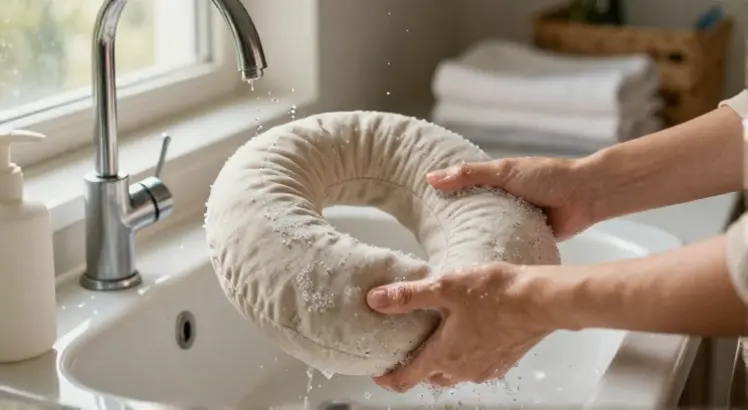
Place the entire pillow into the soapy water and press it down gently so the beads absorb the liquid. Let it soak for 15 to 20 minutes. Then, using your hands, squeeze the pillow rhythmically to push soapy water through the outer shell and into the bead chamber.
Avoid wringing, twisting, or aggressively scrubbing the fabric. These motions put stress on the seams and can force beads toward one end, creating permanent lumps. Treat the pillow like a delicate piece of clothing, soft squeezes only.
Rinsing Thoroughly
Drain the soapy water and refill the basin with clean, cool water. Submerge the pillow and squeeze repeatedly to release detergent from inside the bead core. Change the water at least two times, until no suds appear. Any leftover soap will attract dirt faster and may irritate your skin.
Be patient during the rinse phase. Microbeads trap soap just like they trap moisture, so thorough flushing prevents a stiff, sticky finish. After the final rinse, press the pillow between two clean, dry towels to absorb excess water before moving to drying.
Can You Machine Wash a Bead Neck Pillow?
Some bead pillows explicitly state they are machine washable, but these models are rare. If your pillow has a removable, washable cover, you can machine wash the cover on a gentle cycle. The inner bead sack should still be hand washed or spot cleaned unless the tag says otherwise.
If your travel neck pillow has a cover that zips off, check our guide on how to wash a travel pillow for more detailed fabric care. Even when machine washing a cover, use a mesh laundry bag to prevent zipper damage and snags.
When Machine Washing Is an Option
For the few fully washable beaded pillows, place the pillow inside a zippered mesh laundry bag. Set the washer to a delicate cycle with cold water and low spin. Add an extra rinse if your machine allows, because bead pillows hold onto detergent.
Never wash a bead pillow with heavy items like towels or jeans. The weight can crush the beads and pop seams. If you hear a rhythmic thumping during the spin cycle, the beads are bunching up, and you risk tearing the fabric. Stop the cycle immediately.
Machine Washing Precautions
Even if the label permits machine washing, inspect every seam before you start. Loose threads signal a weak point. Reinforce any suspect seams with a needle and thread, or simply default to hand washing. It takes one small hole to fill your machine with thousands of static beads.
Always zip the pillow into a bag. If a seam does burst, the bag will contain the mess. For extra protection, consider consulting a microbead pillow care instructions guide from a trusted cleaning resource to verify your specific model’s tolerance.
How to Dry a Neck Pillow with Beads
Drying a bead-filled pillow demands patience because trapped moisture inside the core leads to mildew. Never put a beaded pillow in the dryer, the high heat will melt polystyrene beads and shrink the shell. Air drying is the only safe method.
Air Drying Best Practices
Lay a dry towel on a flat, well-ventilated surface and place the pillow on top. Gently press out as much water as possible without twisting. Reshape the pillow to its original U-shape form and let it air dry for 24 to 48 hours. Turn the pillow over after the first 12 hours to expose the damp underside.
Point a fan toward the pillow to speed up evaporation. Do not use a hairdryer or any direct heat source. Check the pillow’s center by pressing firmly, if you feel any coolness or moisture inside, give it more time. Mildew loves a slightly damp bead pocket.
Fluffing and Redistributing Beads
As the pillow dries, the beads may clump into one area. Every few hours, massage the pillow with your hands to break up clumps and redistribute the filling evenly. Pay special attention to the curved neck area, where beads like to settle.
For stubborn clumping, you can gently roll the pillow back and forth on a clean floor, like rolling dough. This mechanical action helps separate stuck beads without stressing the seams. A well-fluffed, evenly filled pillow will support your neck correctly once dry.
Deodorizing a Smelly Neck Pillow
Over time, even a clean-looking bead pillow can develop a stale sweat smell. Between washes, you can freshen it with natural deodorizers that are safe for beads. This reduces how often you need to wash the entire pillow.
Baking Soda Freshening
Sprinkle a generous layer of baking soda over the pillow and let it sit for at least four hours, or overnight. The powder absorbs odors trapped in the fabric and the bead fill. After the waiting period, vacuum the pillow thoroughly using an upholstery brush attachment.
For an even deeper refresh, you can follow our method for deodorizing pillows with baking soda. It works brilliantly on bead pillows that cannot be frequently wet-washed. Baking soda is gentle and leaves no chemical scent behind.
Sunlight and Fresh Air
On a dry, sunny day, place your pillow outside in indirect sunlight for a few hours. UV rays naturally kill odor-causing bacteria, but direct, harsh sun can fade the outer fabric and degrade the foam beads if they have any foam coating. Limit exposure to a gentle morning light.
Never leave a bead pillow in a hot car or enclosed sunroom to dry. Extreme heat will cause the beads to shrink or stick together. A breezy, shaded spot is ideal for airing out and keeping your pillow fresh.
Common Mistakes to Avoid
- Skipping the seam check: A tiny hole releases thousands of beads. Run your fingers along every stitch before washing.
- Using hot water or a dryer: Polystyrene beads soften at 160°F (71°C). Stick to cool water and air drying.
- Wringing out the pillow: Twisting forces beads against seams with immense pressure. Always press, never wring.
- Washing with heavy fabrics: If you machine wash a cover, keep it separate from jeans and towels to prevent zipper tears and uneven wear.
- Using bleach or strong chemicals: These break down bead coatings and shorten the pillow’s lifespan.
Frequently Asked Questions
Can I wash a microbead neck pillow in hot water?
No, hot water can cause polystyrene beads to deform or even begin to fuse together. Always use lukewarm or cool water for hand washing. Hot water also damages the outer fabric, leading to shrinkage or seam failure. Cold is your friend.
How do I fix clumpy beads after washing?
Clumping is normal after the drying process. Once the pillow is completely dry, knead the bead sac with your fingers, breaking apart stuck beads. For stubborn areas, roll the pillow firmly on a clean surface. If clumps persist, a 30-minute tumble in a dryer on air-only, no-heat fluff cycle with a tennis ball inside a mesh bag can help, but only if your pillow is truly dryer-safe and you remove it before any warmth builds.
What if my pillow has a removable cover?
Take the cover off and launder it according to its fabric care tag, usually a gentle machine wash. The inner bead insert should be handled separately. Most inserts are spot-clean only, but some can be hand washed gently. Check the insert’s tag and never machine wash the bead pouch unless specifically stated.
Conclusion
Cleaning a bead-filled neck pillow feels intimidating, but a mindful hand wash and thorough air drying will keep it supportive and hygienic. The golden rules are simple: cool water, gentle squeeze, no wringing, and zero heat. Remember to check seams and refresh with baking soda between washes.
With the right care, your travel neck pillow will last through countless trips and power naps. Treat it gently, and it will keep serving up cozy neck relief without the stale smell. Next time you pack your bag, you will know exactly how to wash a neck pillow with beads and keep it smelling like new.