
When the holiday season wraps up, packing away your festive decor can feel bittersweet, and logistics can get messy. Holiday throw pillows add the perfect cozy touch to your winter setup, but if they are packed away incorrectly, they can easily become flattened, musty, or ruined by moisture and pests before next December rolls around.
Learning how to store christmas pillows properly is the key to protecting their shape, vibrant colors, and delicate embroidery during the off-season. Whether you are dealing with bulky structural cushions, delicate sequined details, or interchangeable holiday covers, this guide breaks down the best storage methods, from vacuum sealing to breathable containers, so your festive favorites look brand new and smell completely fresh the moment you unpack them next year.
Why Proper Christmas Pillow Storage Matters More Than You Think
Christmas pillows often feature delicate embellishments. You are dealing with sequins, embroidery, faux fur, and chunky knits that are far more fragile than your everyday cotton pillowcases. Dust mites and moisture are the primary enemies here. If you simply stack them in a damp basement, you risk mildew growth that permanently damages the fibers.
Additionally, many holiday pillows contain foam or down-alternative fillers. These materials compress under heavy weight. If you pile heavy boxes on top of a unprotected pillow, the filling will lose its loft. By creating a dedicated storage routine, you ensure that when the next holiday season arrives, you open a box filled with fresh, clean, and ready-to-use decor.
How to Store Christmas Pillows: A Step-by-Step Plan
1. Start with a Deep Clean Before Packing
Never store a pillow that has absorbed body oils, hair product, or cookie crumbs from a holiday party. Even if the fabric looks clean, invisible residues act as bait for silverfish and moths. You must check the care label on the seam. If the pillow has a removable cover, unzip it and toss it in the washing machine on a gentle cycle with cold water.
For pillows with delicate faux fur or non-removable covers, spot cleaning is mandatory. Mix a small amount of mild detergent with water and gently dab the stained area. Always let the pillow dry completely in the sunlight or a breezy room for at least 24 hours. Trapped moisture inside the filling leads to a sour, stale odor that is extremely difficult to remove later.
2. Choose the Right Storage Container
Plastic garbage bags are the worst enemy of fine textiles. They trap humidity and do not allow the fabric to breathe, which can cause yellowing over time. You should invest in breathable storage options that protect against dust while allowing air circulation. Here is a breakdown of the best container choices:
- Cotton Canvas Bags: These are ideal for fabric pillows because they wick moisture away. You can easily slide these under a guest bed.
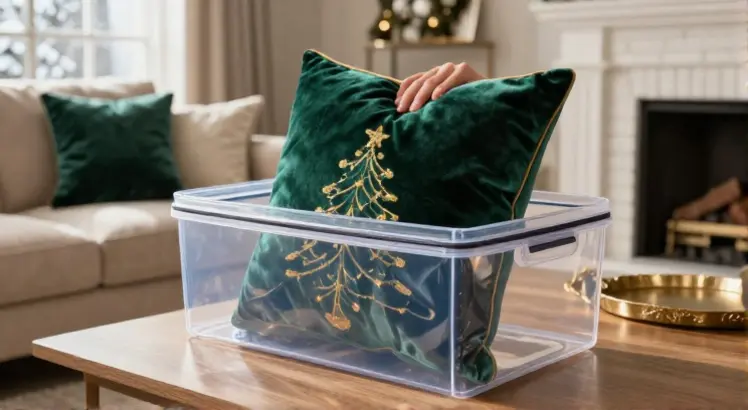
- Plastic Bins with Lids: If you must use plastic, choose clear, airtight bins. However, you should drill a few tiny holes in the sides for ventilation or leave the lid slightly unclipped to prevent a greenhouse effect.
- Vacuum Storage Bags: These are great for saving space, but use them with extreme caution. Aggressive compression can permanently wrinkle embroidery and crack vintage vinyl prints. Only use these for plush, solid fabric pillows with no structured details.
3. Master the Art of Acid-Free Wrapping
If you store pillows directly on raw wooden attic shelves or painted metal racks, you risk chemical transfer stains. A reddish-brown stain appearing on white fabric is often a reaction between the finish of the shelf and the textile. To prevent this, wrap each pillow individually in acid-free tissue paper. This creates a pH-neutral barrier that stops discoloration.
For pillows with beading or sequins, wrap them in a clean white cotton pillowcase before placing them in the bin. This prevents the sequins from snagging on other fabrics. It also provides a soft, friction-free environment that preserves the shiny finish of the decorations. You can easily label the outside of the pillowcase with a permanent marker to identify the contents without opening everything.
Organization Strategies for Large Collections
If you are a maximalist decorator who swaps pillows for every minor holiday from Halloween to New Year’s, an inventory system is required. You do not want to rummage through twenty identical storage bins searching for the Thanksgiving turkey pillow in November. A clear labeling system saves time and reduces the frustration of heavy lifting.
- Color-Coded Tags: Assign red tags strictly to Christmas, orange to Halloween, and pastel labels to Easter. This visual cue helps you instantly grab the correct bin from the garage rafters.
- Photo Inventory: Take a snapshot of the pillows inside and tape it to the front of the bin. Photos are often faster to process than reading written labels, especially when bins are stacked high overhead.
- Weight Distribution: Place the heaviest, most durable pillows on the bottom of the stack. Light, airy pillows with fragile lace should rest on top so they do not flatten.
The Ideal Environment: Temperature and Humidity Control
The location of your storage matters just as much as the container you use. Attics are famously problematic because the temperature fluctuates wildly. Extreme heat can melt the glue holding glitter onto your decorative pillow covers. Conversely, basements are damp and encourage mold spores to multiply within the fibers.
If your only option is a garage or basement, you must add a desiccant like silica gel packets to the tubs. These absorb excess atmospheric moisture. A dark, climate-controlled closet is the gold standard for preserving textiles. Keep the pillows away from direct sunlight at all costs, as UV rays will fade rich reds and greens into dull, unappealing shades in a matter of months.
Protecting Embellished and Vintage Christmas Pillows
Heirloom needlepoint pillows require museum-quality care. The wool fibers in needlepoint are a food source for carpet beetles. These pests can turn a cherished handmade item into a pile of dust. You should never use mothballs with these pillows, as the chemical naphthalene can react with metallic threads and cause them to tarnish. Instead, use natural cedar blocks or lavender sachets as a pest repellent. Make sure the wood does not touch the fabric directly, as the natural oils can still stain.
For pillows with battery-operated lights or musical elements, you must remove the batteries before the long off-season. Alkaline batteries leak potassium hydroxide over time, which destroys circuitry and corrodes the fabric surrounding the battery pack. Store the electronic pack safely in a separate, labeled bag inside the main container.
Reviving Your Pillows After Storage
When you pull your pillows out of storage after ten months, they will likely look a bit sad and squashed. Do not worry, this is usually temporary. Give them a vigorous shake to break up the clumped filling. If your pillows are safe to toss in the dryer, use a no-heat, “air fluff” cycle with a couple of wool dryer balls. The motion of the balls helps restore the loft and plumpness of the fiber.
Hang them outside on a dry, breezy day for a few hours, but keep them out of direct sun. This “air bath” is excellent for removing the stale smell that even clean items acquire while packed away. Finally, use a fabric refresher spray lightly over the surface to prepare them for your holiday display. You can find highly-rated options for washing delicate bedding covers, which are similar to specific pillowcases you might want to clean faux fur pillows safely.
Common Mistakes to Avoid
Many people ruin their holiday collection by skipping simple steps. You might think you are saving time by throwing everything in a contractor bag, but this leads to heartbreak in December. Avoid these frequent storage blunders to keep your pillows looking new for years.
- Skipping the lint roller: Always roll over glitter pillows before storing. Loose glitter acts like a grinding paste and scuffs the surface of other pillows.
- Storing while damp: This is the number one cause of black mold spots. If you cannot dry something for 48 hours, do not pack it yet.
- Overstuffing bins: Cramming five pillows into a bin designed for two stretches the seams and distorts the shape. Allow the pillows to rest naturally without tension.
- Ignoring manufacturer tags: If the tag says “dry clean only,” ignore it at your peril. A single wash cycle can ruin water-sensitive velvet finishes.
Using Vacuum Bags Safely for Space Saving
Space is a premium commodity in small apartments, making vacuum bags very tempting. You can use them, but you must use strategy. Only fill the bag halfway. This prevents extreme pressure on the center of the pillow. Draw out about 75 percent of the air. You do not need a brick-hard, fully vacuum-sealed pancake. Leaving a little air cushion inside protects the fiber structure.
After you release the seal next winter, do not panic if the pillow looks dented. Synthetic polyfill has a “memory” and usually expands fully after 24 to 48 hours of exposure to room air. You can manually massage the filling to break up stubborn lumps. If you are also refreshing your main bedding to match the season, it helps to organize seasonal pillows by rotation so nothing gets lost.
Frequently Asked Questions
Can I store Christmas pillows in my attic?
Yes, but only if the attic is insulated and weatherproofed. If summer temperatures regularly exceed 85 degrees Fahrenheit up there, it is not safe. The heat can melt adhesives used in decorative trims. Always use rodent-proof, sealed containers for attic storage to prevent mice from shredding the fabric to make nests.
How do I prevent musty smells from developing?
The key is absolute dryness. Insert silica gel packets inside each storage bag to capture ambient moisture. Replace these packets once a year. For a natural fresh scent, a sachet of dried lavender is excellent, but keep it separated from the white fabric by a layer of tissue paper to avoid oil stains.
Is it better to store pillows flat or standing up?
Storing them flat is always the better option. Laying them horizontally stacks the filling evenly. When you store a pillow standing on its edge like a book, gravity eventually pulls the filling down to the bottom, creating an awkward, lumpy shape that is hard to fix. If you must stand them, rotate them every few weeks, which is impractical for long-term storage.
Do I need to remove the pillow insert before storage?
If the cover is removable, it is a great idea to separate them. A cotton cover can be folded, while the polyester insert needs room to breathe. This separation also allows you to more thoroughly clean the cover, which absorbs the majority of skin contact and odors.
What is the best way to store expensive sequined pillows?
Turn them inside out if possible, or wrap them with the sequin side facing soft, acid-free tissue. Smooth the sequins flat before wrapping. Any folded or bent sequin will take a permanent crease under pressure. Store these pillows in their own dedicated, hard-sided box to prevent anything from landing on top of them and crushing the texture.
Conclusion
Knowing how to store Christmas pillows correctly is the secret to a seamless holiday decorating experience every year. It transforms a chore from a frantic scramble into a peaceful ritual. By prioritizing cleaning, opting for breathable storage containers over trash bags, and controlling the humidity in your environment, you safeguard the money you spent on your seasonal decor.
Start this year by purging any storage containers that are cracked or dirty and replacing them with sturdy, labeled bins. Take the time to wrap your favorite velvet Santa face in tissue paper like the treasure it is. When next December arrives, you will thank yourself when you open a box of flawlessly preserved, fresh-smelling pillows ready to transform your living space instantly. For advanced tips on keeping your year-round decorative pillows looking sharp, you can explore expert advice on caring for your home textiles.