
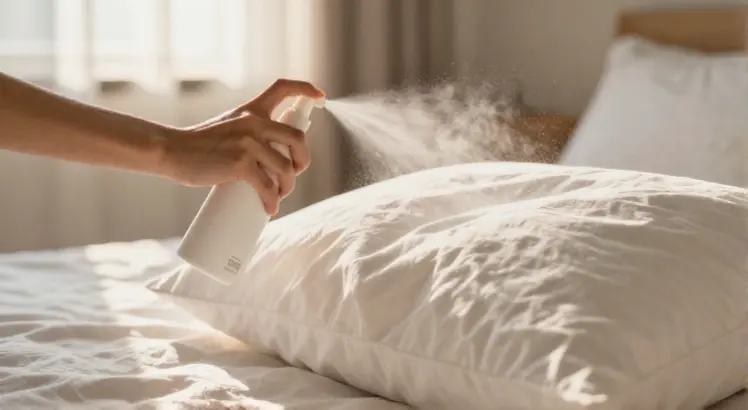
You wake up with allergies, or maybe you have been sick, and the first thought is to douse your pillow in a disinfectant spray like Lysol. It feels like a quick fix to kill germs, dust mites, and odors, but it raises a crucial question: is it safe to spray Lysol on pillows? Before you reach for that can, you need to understand what happens when the chemicals in Lysol meet the fabric you press your face against for eight hours a night. This guide breaks down the safety risks, the potential damage to your favorite pillow, and the expert-backed methods to sanitize your bedding properly.
What Is Lysol and How Does It Work?
Lysol is a brand of disinfectant spray that relies on active ingredients like alkyl dimethyl benzyl ammonium saccharinate and ethanol. As an aerosol, it is designed to kill 99.9% of viruses and bacteria on hard, non-porous surfaces when used as directed. The product works by denaturing proteins and disrupting the cell membranes of microorganisms. On a hard countertop, it evaporates quickly and leaves behind little residue.
However, a pillow is a porous, absorbent surface. This fundamental difference is why the safety rules change. While Lysol can sanitize a doorknob effectively, the interaction with textile fibers, foam, and down feathers creates a completely different scenario. The spray does not simply evaporate, it sinks in and lingers where your skin and respiratory system can absorb it over time.
Is It Safe to Spray Lysol on Pillows? The Hard Truth
So, is it safe to spray Lysol on pillows? The short answer for daily use is no. While a single, light misting might not send you to the emergency room, repeated exposure creates a buildup of toxic chemical residue. There are three major risk categories to consider: chemical absorption, respiratory hazards, and physical damage to the pillow materials. The “safety” largely depends on whether you let the pillow dry completely before using it, but even then, the chemical particles can remain embedded in the fibers.
Inhalation Risks While Sleeping
The smell of a “clean” pillow might be comforting, but it represents volatile organic compounds (VOCs) entering your lungs. When you spray an aerosol on a porous surface, it off-gases for hours. Inhaling these fumes in an enclosed bedroom can trigger asthma attacks, allergic reactions, and chronic coughing. The risk is exponentially higher for children and pets who have smaller lung capacities and faster metabolic rates, making a sanitized pillow a potential source of respiratory distress rather than comfort.
Fabric Damage and Staining
Safety is not just about health, it is also about the longevity of your investment. Lysol contains alcohol and other solvents that can break down textile bonds. On natural fibers like cotton or silk, this can cause yellowing or bleaching effects. The sticky residue often attracts dirt over time, causing your pillow to turn a dingy gray color much faster than normal washing would. This residue is extremely difficult to remove, often ruining expensive pillows.
Impact on Different Pillow Fillings
- Memory Foam Pillows: Memory foam acts like a sponge. Spraying Lysol introduces moisture and chemicals deep into the foam’s open cells, breaking down the polyurethane structure. This causes the foam to lose its elasticity, crumble, or yellow prematurely. The chemicals are almost impossible to air out completely from foam.
- Down and Feather Pillows: The natural oils on feathers provide loft. Alcohol in disinfectant sprays strips these oils, making feathers brittle and flat. The moisture can also clump the down, creating mold pockets deep inside the pillow if it does not dry perfectly.
- Polyester and Down Alternative: Synthetic fills are more resilient but static-prone. The chemical residue can coat the plastic fibers, making them feel sticky and matted down over time, ruining the fluffy texture.
What Do Manufacturers Say About Disinfecting Pillows?
Most pillow manufacturers explicitly warn against the use of spray disinfectants. Check the care label of a high-end pillow from brands like Tempur-Pedic or Saatva, and you will see instructions to avoid harsh chemicals and liquid sprays. Warranties are often void if chemical damage is detected. Instead, they emphasize physical barriers and proper washing routines. The consensus is that chemical aerosols are too aggressive for the delicate internal structures designed to support your cervical spine during sleep.
Safer Alternatives to Disinfect Your Pillow
If spraying Lysol is not safe, how do you kill the bacteria, dust mites, and viruses living in your pillow? Fortunately, there are highly effective methods that rely on heat, agitation, and natural solvents rather than synthetic chemicals. These techniques sanitize without the dangerous residue.
The Power of the Washing Machine
For most synthetic and down pillows, a trip through the washing machine is the gold standard. Hot water (130°F or higher) is lethal to dust mites and most bacteria. When you are washing pillows with baking soda, you are harnessing a natural cleaning agent that deodorizes and gently scrubs fibers without chemical buildup. Always run an extra rinse cycle to ensure all soap and allergens are flushed out.
Steam Cleaning for Sanitization
Steam is a powerful disinfectant. A garment steamer or a steam cleaning machine can reach temperatures that instantly kill bed bugs, mold spores, and bacteria. Pass the steamer slowly over the surface of the pillow, and the heat penetrates deep into the filling without soaking it with water. This is an ideal solution for memory foam pillows that cannot be submerged in a washing machine but can tolerate light moisture if dried quickly in direct sunlight.
The Sun and Fresh Air
Never underestimate ultraviolet (UV) light. Hanging pillows in direct sunlight for a few hours is a natural disinfectant. The UV rays break down the DNA of microbes, while the airflow removes musty odors. If you are simply making pillows smell fresh without washing, a few hours in the breeze on a sunny day works better than any chemical spray and leaves zero residue behind.
Pillow Protectors: The First Line of Defense
The safest way to sanitize your sleep environment is to prevent contamination in the first place. A high-quality, zippered pillow protector acts as a shield against sweat, drool, and skin cells. You can wash the protector weekly in hot water and bleach safely, preserving the internal pillow. This barrier keeps allergens locked out of the filling, eliminating the urge to spray the pillow directly with chemicals.
How to Properly Sanitize Pillows Without Harsh Chemicals
Creating a sanitization routine eliminates the need to ask “is it safe to spray Lysol on pillows” because you will not need it. The key is consistent maintenance rather than emergency chemical bombing. Start by checking the manufacturer’s tag. If the pillow is machine washable, wash it every three to six months. Dry it on low heat with wool dryer balls, not dryer sheets. The balls beat the filling back to life and ensure no damp spots remain, which could grow mildew.
For non-washable pillows like shredded latex or specialty memory foam, vacuum the surface regularly with an upholstery attachment to suck up dead skin and dust mite debris. Follow this with a spritz of a homemade deodorizer. A simple mix of one part vodka or rubbing alcohol to two parts water in a spray bottle (not a commercial aerosol) will deodorize and evaporate quickly without leaving the heavy, sticky residue that Lysol does. This method is referenced in EPA’s guidelines on soft surface disinfection, which prioritize mechanical removal of germs over chemical soaking for fabrics.
Frequently Asked Questions
Can I spray Lysol on my pillow if I let it dry completely?
Even when dry, chemical residues remain. The evaporation of water and alcohol does not remove the quaternary ammonium compounds. These bind to the textiles and can still transfer to your skin and mouth. A completely dry pillow sprayed with Lysol is still carrying disinfectant solids that can irritate the skin over time.
Does Lysol kill dust mites instantly?
Lysol can kill dust mites on contact, but spraying it on a pillow is not an efficient solution. The mites live deep inside the fill, where the mist cannot penetrate. Even if surface mites are killed, the dead carcasses and feces remain, which are the primary triggers for allergies. Washing in hot water or freezing the pillow for 24 hours is far more effective at eliminating the entire population and removing the allergens.
What about Lysol Laundry Sanitizer, is that safer?
Lysol Laundry Sanitizer is a different product designed to be diluted in water and rinsed out during the wash cycle. It is generally safe for machine-washable pillows because the rinse cycle removes the chemical buildup. However, always verify your pillow’s care label dictates that water immersion is acceptable. Never use the laundry sanitizer in a spray form on dry foam pillows.
Conclusion: Prioritize Health Over Harsh Chemicals
When you wonder if it is safe to spray Lysol on pillows, you are really asking if a quick fix is worth the long-term cost to your health and bedding. The truth is that disinfectant sprays pose unnecessary exposure risks to your respiratory system and skin. The harsh alcohol and chemical solvents degrade the fibers, flatten the loft, and void warranties. Your pillow is too close to your breathing zone to be treated like a kitchen counter.
Instead, embrace a routine of regular washing, protective covers, and natural UV light. These methods achieve genuine sanitization by removing the bio-load rather than merely poisoning it. Give your pillow the care it deserves, and you will create a cleaner, safer sanctuary for sleep.