
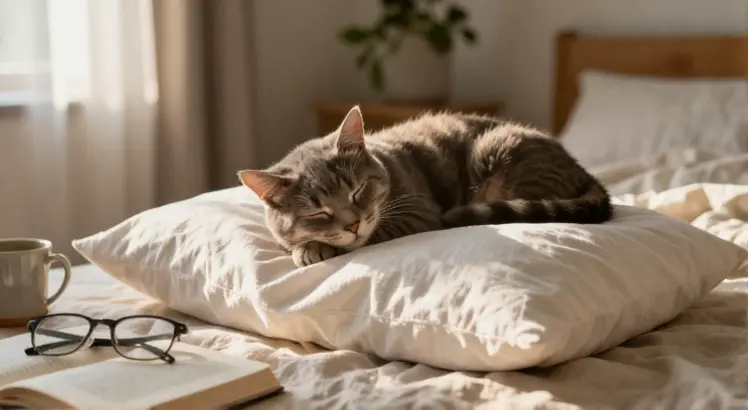
If you have ever woken up with a fluffy feline draped across your head, you have probably asked yourself, “why does my cat like to sleep on my pillow.” This behavior is puzzling for many cat parents. Your pillow seems to hold a special attraction that no fancy cat bed can match. The answer lies in a mix of instinct, comfort, and the deep bond you share with your pet.
You bought plush cushions and heated mats, yet your cat still curls up exactly where you rest your head each night. Understanding the reasons behind this habit can help you manage it without breaking the unique connection you have. It also explains why your cat seems so ridiculously happy wedged between your scalp and the headboard.
In this guide, we will explore the science and psychology that drive feline pillow obsession. We will cover scent bonding, warmth seeking, territorial marking, and the instinct to find a safe, elevated sleeping spot. Along the way, you will find actionable tips and expert advice to help both you and your cat sleep more soundly.
The Top Reasons Your Cat Loves Your Pillow
Your cat’s decision to claim your pillow is not random. Several feline instincts overlap to turn that soft rectangle into prime real estate. From scent to security, every factor reinforces the behavior.
- Your unique scent is concentrated on the pillowcase.
- Body heat from your head and neck creates a cozy microclimate.
- The elevated position satisfies territorial surveillance needs.
- The soft, cradling shape mimics a natural den.
Many of these factors work together. A cat who feels safe, warm, and surrounded by your scent will have the most restful sleep possible. Let’s unpack each reason in detail so you can fully appreciate your pillow’s multipurpose appeal.
Your Scent Is Irresistible
Cats rely heavily on scent to navigate their world. Your pillow absorbs facial oils, sweat, and the subtle pheromones you release overnight. To your cat, this concentrated smell is the ultimate comfort signal. It tells them they are in a safe space guarded by the most trusted human in their life.
When a cat snuggles into your pillow, they are tapping into the same instinct a kitten uses to find its mother. The familiar scent lowers stress levels and triggers a relaxation response. Even if you have just washed your pillowcase, residual odors in the pillow itself remain detectable to their sensitive nose.
This scent based bonding is also why your cat may knead the pillow before settling in. The rhythmic motion replicates nursing behavior and releases endorphins. It is a heartfelt sign that your pillow, and by extension you, represents the ultimate source of calm for your pet. For a deeper look at the emotional side of this behavior, you can read our detailed exploration of feline pillow preferences.
Unbeatable Warmth and Coziness
Cats have a higher normal body temperature than humans, hovering around 101 to 102.5 degrees Fahrenheit. Maintaining that warmth requires extra energy, so felines actively seek out heat sources. Your pillow retains body heat from your head and neck, making it a toasty haven after you get up in the morning.
Memory foam and down pillows are particularly efficient at trapping warmth. If your cat prefers to sleep directly above your head while you are still in bed, they are likely benefiting from the steady flow of heat your scalp gives off. This is the same reason cats seek out sunbeams on the living room floor.
Offering an alternative heat source, like a low wattage heating pad designed for pets, can sometimes redirect this instinct. However, the combination of heat and your scent is a powerful draw. Your pillow hits both notes, making it more appealing than a generic warm spot across the room.
A Secure Territory High Up
In the wild, cats prefer elevated resting spots to monitor their environment for prey and predators. Your pillow, positioned on top of a bed frame and mattress, gives them a satisfying vantage point. From that height, they can watch the bedroom door and windows without having to move a muscle.
Beyond surveillance, elevation plays a role in social hierarchy. Sleeping at head level puts your cat on an equal, or even slightly dominant, plane with you. This is not a sign of aggression, it simply reflects that they view the sleeping area as a shared family territory where they deserve a premium perch.
Territorial marking also occurs when your cat rubs its cheeks against the pillow. Glands on the side of the face deposit pheromones that signal ownership. Mixed with your scent, the message to other pets is clear: this pillow belongs to our colony, and I am a core member.
It Mimics a Natural Nesting Spot
Think about a wild cat’s preferred sleeping arrangement. A hollow in a tree, a depression in tall grass, or a rocky alcove provides three sided protection. A thick pillow replicates this feeling of enclosure. When your cat curls into a tight ball on the pillow, the plush edges cradle their body and spine.
This nesting instinct is especially strong in pregnant females and kittens, but adult cats retain it throughout their lives. The soft give of a pillow allows them to shape a temporary nest by pawing and kneading. Over time, your pillow becomes a custom molded bed perfectly contoured to their body.
If you have ever watched your cat ignore an expensive flat cat bed but immediately sink into a crumpled blanket, you have seen this instinct in action. A pillow provides the same flexible, supportive surface that feels safe against their belly and vital organs.
Is It Safe for Your Cat to Sleep on Your Pillow?
For most healthy adult cats, sharing your pillow is physically safe. There are, however, a few hygiene and health considerations to keep in mind. Cat dander, shed fur, and occasional litter box residue can transfer to the pillowcase. If you have allergies or asthma, that close contact may worsen symptoms overnight.
Another rare but real concern involves small kittens or very large cats accidentally obstructing your breathing if they settle directly across your face. This is usually not a problem with alert adult sleepers, but it is something to monitor. Ensuring your cat sleeps beside the pillow, rather than on your head, reduces any risk.
Parasites like fleas or ringworm spores can also be shared through prolonged close contact. Regular veterinary checkups, flea preventatives, and daily washing of your face before bed are simple precautions. If your pet spends time outdoors, a consistent grooming routine is even more important for shared pillow hygiene.
How to Gently Discourage Pillow Sleeping
You may love your cat but still want your pillow back. The goal is not to punish the behavior, but to offer an equally attractive alternative. Cats respond better to redirection than scolding. With some environmental tweaks, you can reclaim your sleeping space while keeping the peace.
- Place a dedicated cat pillow right next to yours. Use an unwashed pillowcase that carries your scent to ease the transition.
- Install a heated cat bed on a nearby nightstand. Cats often choose the warmest spot in the room.
- Set up a tall cat tree with a plush perch at bed height. The elevation satisfies their need for a high vantage point.
- Use a mild double sided tape strip on one corner of your pillow. Most cats dislike the tacky feel and will avoid it without fear.
- Reward your cat with treats and affection when they use the alternative spot. Positive reinforcement speeds up learning.
Consistency is key. If you allow pillow access on weekends but block it on weekdays, your cat will become confused and may protest. Pick a strategy and stick with it for at least two weeks before deciding it does not work. Meanwhile, maintain excellent hygiene by washing your bedding frequently. For help removing stubborn cat fur from pillow fabrics, check out our step by step fur pillow cleaning guide.
Remember that some cats are simply more stubborn than others. If your feline remains determined to sleep on your pillow, consulting an animal behaviorist can provide personalized strategies. In many cases, a few small changes solve the problem without any stress to the human animal bond.
Frequently Asked Questions
Why does my cat sleep on my pillow and purr loudly?
Purring is a sign of deep contentment and can also serve as a self soothing mechanism. When your cat kneads the pillow, inhales your scent, and purrs, they are essentially telling you they feel completely safe. The elevated vibration may also strengthen the bond they feel with you during sleep.
Is it okay for my cat to sleep on my pillow every night?
From a behavioral standpoint, it is perfectly fine if you are comfortable with the arrangement. However, monitor for any signs of allergy flare ups or sleep disruption on your part. As long as your cat is healthy, parasite free, and not interfering with your breathing, occasional pillow sharing is generally safe.
How can I stop my cat from sleeping on my pillow without upsetting them?
Replacing the pillow with an equally cozy option is the kindest approach. A heated bed infused with your scent, placed at a similar elevation, often does the trick. Avoid sudden shooing or yelling, as this can create anxiety and damage trust. Gradual redirection with rewards works best.
Does my cat sleep on my pillow because it loves me?
Yes, affection plays a significant role. Sleeping on or near your head is a vulnerable act. Your cat chooses the spot where your scent is strongest because they associate you with protection and care. It is a feline compliment of the highest order, even if it sometimes disrupts your own sleep.
What if I am allergic to cat dander but my cat insists on the pillow?
Frequent washing of pillowcases, using a high efficiency particulate air (HEPA) purifier in the bedroom, and grooming your cat regularly can reduce allergen levels. Some owners have success with allergen reducing sprays designed for fabrics. If allergies remain severe, training your cat to sleep on a separate perch is the healthiest long term solution.
Conclusion
The question “why does my cat like to sleep on my pillow” has a multi layered answer rooted in comfort, safety, and love. Your pillow offers the perfect storm of your familiar scent, steady warmth, an elevated lookout, and a nest like shape that appeals to ancient instincts. Understanding these factors helps you appreciate the behavior rather than simply tolerate it.
You have several tools to manage the situation if it disrupts your rest. Offering a heated alternative, placing a cat bed at head height, or using scent transfer techniques can redirect the habit gently. As noted by veterinary insights on cat sleeping habits, respecting your cat’s emotional needs while setting boundaries leads to a happier home for everyone.
Ultimately, that little furry head on your pillow is a testament to the bond you share. With a few adjustments, you can both enjoy restorative sleep, side by side but on your own terms. Whether you choose to embrace the nightly snuggles or reclaim your pillow, knowing the “why” makes all the difference.
[TITLE]: Why Does My Cat Like to Sleep on My Pillow?
[META]: Discover why your cat sleeps on your pillow, from scent bonding to warmth and territory. Learn expert tips to reclaim your space.
[CONTENT]:
If you have ever woken up with a fluffy feline draped across your head, you have probably asked yourself, “why does my cat like to sleep on my pillow.” This behavior is puzzling for many cat parents. Your pillow seems to hold a special attraction that no fancy cat bed can match. The answer lies in a mix of instinct, comfort, and the deep bond you share with your pet.
You bought plush cushions and heated mats, yet your cat still curls up exactly where you rest your head each night. Understanding the reasons behind this habit can help you manage it without breaking the unique connection you have. It also explains why your cat seems so ridiculously happy wedged between your scalp and the headboard.
In this guide, we will explore the science and psychology that drive feline pillow obsession. We will cover scent bonding, warmth seeking, territorial marking, and the instinct to find a safe, elevated sleeping spot. Along the way, you will find actionable tips and expert advice to help both you and your cat sleep more soundly.
The Top Reasons Your Cat Loves Your Pillow
Your cat’s decision to claim your pillow is not random. Several feline instincts overlap to turn that soft rectangle into prime real estate. From scent to security, every factor reinforces the behavior.
- Your unique scent is concentrated on the pillowcase.
- Body heat from your head and neck creates a cozy microclimate.
- The elevated position satisfies territorial surveillance needs.
- The soft, cradling shape mimics a natural den.
Many of these factors work together. A cat who feels safe, warm, and surrounded by your scent will have the most restful sleep possible. Let’s unpack each reason in detail so you can fully appreciate your pillow’s multipurpose appeal.
Your Scent Is Irresistible
Cats rely heavily on scent to navigate their world. Your pillow absorbs facial oils, sweat, and the subtle pheromones you release overnight. To your cat, this concentrated smell is the ultimate comfort signal. It tells them they are in a safe space guarded by the most trusted human in their life.
When a cat snuggles into your pillow, they are tapping into the same instinct a kitten uses to find its mother. The familiar scent lowers stress levels and triggers a relaxation response. Even if you have just washed your pillowcase, residual odors in the pillow itself remain detectable to their sensitive nose.
This scent based bonding is also why your cat may knead the pillow before settling in. The rhythmic motion replicates nursing behavior and releases endorphins. It is a heartfelt sign that your pillow, and by extension you, represents the ultimate source of calm for your pet. For a deeper look at the emotional side of this behavior, you can read our detailed exploration of feline pillow preferences.
Unbeatable Warmth and Coziness
Cats have a higher normal body temperature than humans, hovering around 101 to 102.5 degrees Fahrenheit. Maintaining that warmth requires extra energy, so felines actively seek out heat sources. Your pillow retains body heat from your head and neck, making it a toasty haven after you get up in the morning.
Memory foam and down pillows are particularly efficient at trapping warmth. If your cat prefers to sleep directly above your head while you are still in bed, they are likely benefiting from the steady flow of heat your scalp gives off. This is the same reason cats seek out sunbeams on the living room floor.
Offering an alternative heat source, like a low wattage heating pad designed for pets, can sometimes redirect this instinct. However, the combination of heat and your scent is a powerful draw. Your pillow hits both notes, making it more appealing than a generic warm spot across the room.
A Secure Territory High Up
In the wild, cats prefer elevated resting spots to monitor their environment for prey and predators. Your pillow, positioned on top of a bed frame and mattress, gives them a satisfying vantage point. From that height, they can watch the bedroom door and windows without having to move a muscle.
Beyond surveillance, elevation plays a role in social hierarchy. Sleeping at head level puts your cat on an equal, or even slightly dominant, plane with you. This is not a sign of aggression, it simply reflects that they view the sleeping area as a shared family territory where they deserve a premium perch.
Territorial marking also occurs when your cat rubs its cheeks against the pillow. Glands on the side of the face deposit pheromones that signal ownership. Mixed with your scent, the message to other pets is clear: this pillow belongs to our colony, and I am a core member.
It Mimics a Natural Nesting Spot
Think about a wild cat’s preferred sleeping arrangement. A hollow in a tree, a depression in tall grass, or a rocky alcove provides three sided protection. A thick pillow replicates this feeling of enclosure. When your cat curls into a tight ball on the pillow, the plush edges cradle their body and spine.
This nesting instinct is especially strong in pregnant females and kittens, but adult cats retain it throughout their lives. The soft give of a pillow allows them to shape a temporary nest by pawing and kneading. Over time, your pillow becomes a custom molded bed perfectly contoured to their body.
If you have ever watched your cat ignore an expensive flat cat bed but immediately sink into a crumpled blanket, you have seen this instinct in action. A pillow provides the same flexible, supportive surface that feels safe against their belly and vital organs.
Is It Safe for Your Cat to Sleep on Your Pillow?
For most healthy adult cats, sharing your pillow is physically safe. There are, however, a few hygiene and health considerations to keep in mind. Cat dander, shed fur, and occasional litter box residue can transfer to the pillowcase. If you have allergies or asthma, that close contact may worsen symptoms overnight.
Another rare but real concern involves small kittens or very large cats accidentally obstructing your breathing if they settle directly across your face. This is usually not a problem with alert adult sleepers, but it is something to monitor. Ensuring your cat sleeps beside the pillow, rather than on your head, reduces any risk.
Parasites like fleas or ringworm spores can also be shared through prolonged close contact. Regular veterinary checkups, flea preventatives, and daily washing of your face before bed are simple precautions. If your pet spends time outdoors, a consistent grooming routine is even more important for shared pillow hygiene.
How to Gently Discourage Pillow Sleeping
You may love your cat but still want your pillow back. The goal is not to punish the behavior, but to offer an equally attractive alternative. Cats respond better to redirection than scolding. With some environmental tweaks, you can reclaim your sleeping space while keeping the peace.
- Place a dedicated cat pillow right next to yours. Use an unwashed pillowcase that carries your scent to ease the transition.
- Install a heated cat bed on a nearby nightstand. Cats often choose the warmest spot in the room.
- Set up a tall cat tree with a plush perch at bed height. The elevation satisfies their need for a high vantage point.
- Use a mild double sided tape strip on one corner of your pillow. Most cats dislike the tacky feel and will avoid it without fear.
- Reward your cat with treats and affection when they use the alternative spot. Positive reinforcement speeds up learning.
Consistency is key. If you allow pillow access on weekends but block it on weekdays, your cat will become confused and may protest. Pick a strategy and stick with it for at least two weeks before deciding it does not work. Meanwhile, maintain excellent hygiene by washing your bedding frequently. For help removing stubborn cat fur from pillow fabrics, check out our step by step fur pillow cleaning guide.
Remember that some cats are simply more stubborn than others. If your feline remains determined to sleep on your pillow, consulting an animal behaviorist can provide personalized strategies. In many cases, a few small changes solve the problem without any stress to the human animal bond.
Frequently Asked Questions
Why does my cat sleep on my pillow and purr loudly?
Purring is a sign of deep contentment and can also serve as a self soothing mechanism. When your cat kneads the pillow, inhales your scent, and purrs, they are essentially telling you they feel completely safe. The elevated vibration may also strengthen the bond they feel with you during sleep.
Is it okay for my cat to sleep on my pillow every night?
From a behavioral standpoint, it is perfectly fine if you are comfortable with the arrangement. However, monitor for any signs of allergy flare ups or sleep disruption on your part. As long as your cat is healthy, parasite free, and not interfering with your breathing, occasional pillow sharing is generally safe.
How can I stop my cat from sleeping on my pillow without upsetting them?
Replacing the pillow with an equally cozy option is the kindest approach. A heated bed infused with your scent, placed at a similar elevation, often does the trick. Avoid sudden shooing or yelling, as this can create anxiety and damage trust. Gradual redirection with rewards works best.
Does my cat sleep on my pillow because it loves me?
Yes, affection plays a significant role. Sleeping on or near your head is a vulnerable act. Your cat chooses the spot where your scent is strongest because they associate you with protection and care. It is a feline compliment of the highest order, even if it sometimes disrupts your own sleep.
What if I am allergic to cat dander but my cat insists on the pillow?
Frequent washing of pillowcases, using a high efficiency particulate air (HEPA) purifier in the bedroom, and grooming your cat regularly can reduce allergen levels. Some owners have success with allergen reducing sprays designed for fabrics. If allergies remain severe, training your cat to sleep on a separate perch is the healthiest long term solution.
Conclusion
The question “why does my cat like to sleep on my pillow” has a multi layered answer rooted in comfort, safety, and love. Your pillow offers the perfect storm of your familiar scent, steady warmth, an elevated lookout, and a nest like shape that appeals to ancient instincts. Understanding these factors helps you appreciate the behavior rather than simply tolerate it.
You have several tools to manage the situation if it disrupts your rest. Offering a heated alternative, placing a cat bed at head height, or using scent transfer techniques can redirect the habit gently. As noted by veterinary insights on cat sleeping habits, respecting your cat’s emotional needs while setting boundaries leads to a happier home for everyone.
Ultimately, that little furry head on your pillow is a testament to the bond you share. With a few adjustments, you can both enjoy restorative sleep, side by side but on your own terms. Whether you choose to embrace the nightly snuggles or reclaim your pillow, knowing the “why” makes all the difference.